In brief
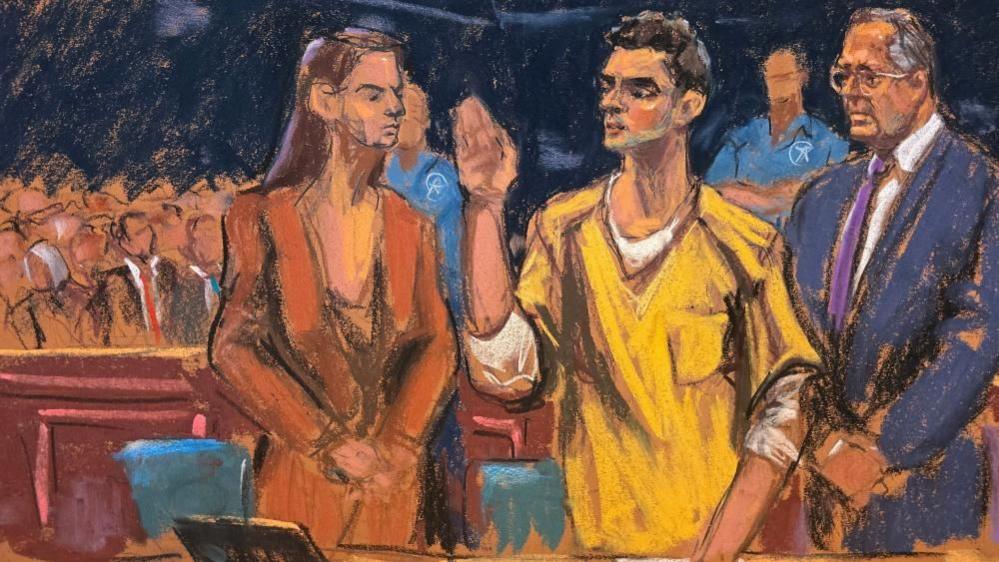
In a tense federal courtroom in New York, Luigi Mangione pleaded guilty to the killing of UnitedHealthcare CEO Brian Thompson. The 28‑year‑old, who had evaded a spouse known to the company, stood in a beige prison uniform, wearing shackles on his feet but not handcuffed by marshals. Judge Margaret Garnett confirmed his admission, and the judge’s testimony led to a sentencing set for 18 December. Prosecutors recommend 24–30 years in prison, yet final sentencing will rest with the judge. The case that framed media and public attention now takes its first formal step toward justice.
On Friday, a federal courtroom in Manhattan became the scene of a pivotal moment in a case that had captured national headlines. Luigi Mangione, 28, found himself in the path of justice for the presumed murder of UnitedHealthcare chief executive Brian Thompson, a violent act that had taken place on a Manhattan street in December 2024.
Witnesses outside the courtroom saw a crowd of reporters, supporters and court staff who had gained entry through a lottery system. The front rows were reserved for Thompson’s family, many of whom voiced their grief with visibly tears. While lawyers reviewed documents in silence, Judge Margaret Garnett awaited the defendant’s decision.
After a brief deliberation, Mangione’s lawyer, Karen Friedman Agnifilo, informed the judge that his client was ready to plead guilty. Judge Garnett cautioned that the defendant needed to understand the weight of his choice. When Mangione answered, his voice was terse, but clear: he acknowledged that he could face life in prison and that he indeed shot Thompson.
During the one‑minute admission, Mangione recounted the preparations leading up to the attack. He explained how he had received information about a scheduled UnitedHealthcare conference, contacted executives under an alias to secure details, and used a 3D‑printer to fabricate a firearm. On the morning of the shooting, he wielded the weapon and finished the act that would soon become a vivid headline.
Following the plea, the judge agreed to accept it. Mangione is set to face sentencing on 18 December. Prosecutors anticipate a sentence of 24–30 years, but the final determination will rest with the judge. The state trial, which addresses the murder charges directly, remains scheduled to commence in September.
This first public confession marks a turning point for Thompson’s family, who see it as an important step toward closure and justice for the loss of their relative. The courtroom that held the confession will now be replayed in its entirety as the legal consequences unfold, drawing further scrutiny into how the system handles high‑profile prosecutions in a divided society.