In brief
In July 2026, students angry at repeated exam paper leaks marched in New Delhi, forcing Education Minister Dharmendra Pradhan to step down. Prime Minister Narendra Modi promptly announced fast‑track courts and tasked tech billionaire Nandan Nilekani to overhaul the exam system, yet the protests reveal deeper problems. India’s 360 million‑strong youth face quadruple‑rate unemployment, a shrinking manufacturing base, and a technology wave that threatens jobs. Experts argue that without a new industrial policy, vocational training, and real job creation, the country risks repeating past growth patterns in a different era.
India’s Youth Anger Becomes Modi’s Biggest Challenge
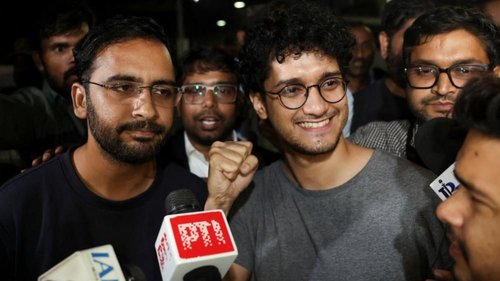
After a wave of protests over repeated entrance‑exam paper leaks, Education Minister Dharmendra Pradhan resigned, and Prime Minister Narendra Modi stepped in to head reforms.
Modi swiftly announced fast‑track courts to prosecute those involved in leaks and appointed tech billionaire Nandan Nilekani to lead an overhaul of India’s exam system, but the protests expose deeper frustrations among the country’s Generation Z.
India boasts the world’s largest youth population—over 360 million people aged 15 to 29—but unemployment rates for young adults are nearly four times higher than for older age groups and far above global averages. Graduate unemployment has hovered around 35–40% for the last 25 years, spiking to 67% in 2023 as the number of graduates outpaced job creation.
The problem is not only the shortage of jobs but also the quality of education. A 2026 State of Working India report estimates that only 3.7% of graduates secure white‑collar work and fewer than 7% get permanent salaried roles.
Manufacturing’s share of India’s GDP has fallen from 17% in 2015 to 14% today, and manufacturing employment stalled for five years after 2015. Experts say the government needs a new industrial policy that revive small‑ and medium‑sized enterprises and the broader manufacturing sector.
Meanwhile, agriculture employment has risen by 80 million people after 2020, a sign of disguised unemployment that masks an economy concentrating on informal jobs.
AI threatens to replace 8–12% of non‑farm jobs in India. The shift is already seen in the software sector, where hiring for degree‑based roles has plateaued, and contract work has risen. CEO Neeti Sharma of Team Lease Digital notes that graduates now have to acquire real‑world skills rather than rely on degrees alone.
HCL Technologies’ recent event in Chennai, where employees joined in chant “we want a hike,” illustrates the broader frustration: the golden‑ticket promise of a software job has been eroded by technology that automates many roles.
“Young graduates will have to rewire their brains,” says Sharma. “Education institutions must pivot from knowledge‑based learning to provide vocational skills.” This shift could mean that even those with graduate degrees may need to consider roles as plumbers, electricians, or mechanics rather than office jobs.
Financial experts warn that an early plateau in earnings could spell disaster for India’s future, something the Modi government will need to avoid through proactive social and economic reforms.
Follow BBC News India on Instagram, YouTube, X and Facebook.