In brief
Former President Donald Trump's recent executive order aimed at enhancing deep-sea mining activities has ignited a heated debate over environmental concerns and international law.
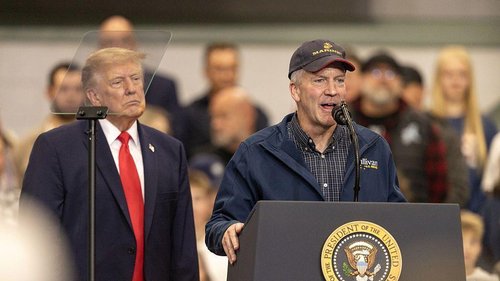
In a significant development, former President Donald Trump has officially signed an executive order intended to propel deep-sea mining operations both within the United States and in international waters. This order, released on Thursday, is part of a broader strategy to enhance access to vital minerals necessary for various sectors, including aerospace, green technology, and healthcare.The deep ocean is said to harbor enormous quantities of polymetallic nodules—potato-shaped rocks teeming with essential minerals such as cobalt and rare earth elements. Trump's decision has drawn criticism from numerous countries and environmental organizations, which argue that deep-sea mining should not proceed without comprehensive scientific assessment. The underlying question remains: is seabed mining a vital economic opportunity or a perilous environmental risk?The executive order purports to position the United States as a pioneer in responsible seabed mineral exploration, but it seems to sidestep ongoing United Nations negotiations regarding mining practices in international waters. A spokesperson from China's Foreign Ministry, Guo Jiakun, condemned the order, asserting it violates international law and disregards the collective interests of the global community. Analysts suggest that Trump's frustrations stem from the U.S. lagging behind China in the realm of rare earths and critical metals production.A U.S. official remarked on the need for the U.S. to surpass China in accessing these undersea resources, stating, “We want the U.S. to get ahead of China in this resource space under the ocean, on the ocean bottom.” The executive order indicates an expedited process for issuing exploration licenses and permits, with projections suggesting an influx of $300 billion into the economy and the potential creation of 100,000 jobs over the next decade.In contrast, nations within the European Union and the United Kingdom advocate for a temporary halt to deep-sea mining until further scientific inquiry can establish its implications. Environmentalists express deep reservations about mining activities, emphasizing the potential harm not only to the ocean floor but to the entire marine ecosystem. Jeff Watters from the Ocean Conservancy warned, “Deep-sea mining is a deeply dangerous endeavor for our ocean.” The potential consequences extend far beyond the seabed, threatening the interconnected web of life within oceanic waters.Despite the uncertainty surrounding the timeline for mining operations, The Metals Company (TMC) has taken steps to secure permits for activities in international waters, with CEO Gerard Barron expressing optimism about commencing mining as early as this year. Barron and other industry advocates contest the environmental concerns, insisting that life in the abyssal zone, situated 3,000 to 6,000 meters below sea level, is sparse. “Here there's zero flora. And if we measure the amount of fauna [animal life], in the form of biomass, there is around 10g per square metre,” he previously stated.As the discourse surrounding deep-sea mining evolves, tensions between economic aspiration and environmental stewardship remain at the forefront of global discussions.