In brief
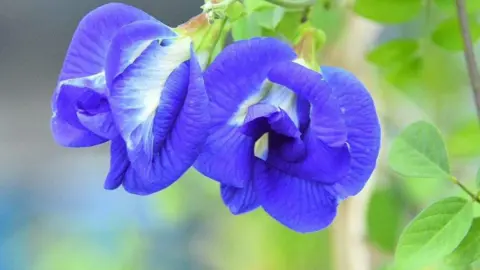
Farmers in India, particularly women, are turning to the butterfly pea flower to improve their livelihoods. This vibrant blue flower, which can be transformed into tea and natural dyes, is changing the agricultural landscape. Nilam Brahma, a farmer from Assam, has seen her fortunes rise after investing in this new crop. As global demand for natural colorants grows, entrepreneurs are betting on the butterfly pea flower's potential to provide sustainable incomes and create a community of women farmers involved in its cultivation.
Until a few years ago, the butterfly pea flower was just another climbing plant in my village, says Nilam Brahma, a resident of Anthaigwlao in Assam, India. Now, the butterfly pea, known as aparajita, is being recognized for its economic potential.
About two years ago, Brahma learned that local women were profiting by selling the flower for making tea and blue dye. She decided to join in, leading to her first earnings of $50 from dried flowers, which inspired her to take control of her financial future.
With her newfound earnings, Brahma secured a small loan to purchase solar dryers, which enhanced her production quality and efficiency. Her success is part of a larger trend, as global demand for butterfly pea products rises, particularly in countries like Thailand and Indonesia.
The global demand for natural colorants is exploding, explains Varshika Reddy, founder of THS Impex, which exports natural dyes. The FDA in the USA has even approved butterfly pea flower as a food additive, although concerns remain in Europe regarding its safety and agricultural classification.
Entrepreneurs like Nitesh Singh, founder of Blue Tea, are also leveraging the flower's unique properties. After initial struggles with quality, he now collaborates with 600 farmers across India, focusing on improving agricultural techniques and regional awareness.
The butterfly pea's striking blue flowers have not only beautified gardens but also changed lives. Farmers, especially women, have formed a supportive community around its cultivation, showcasing a shift from simple agriculture to a thriving business.