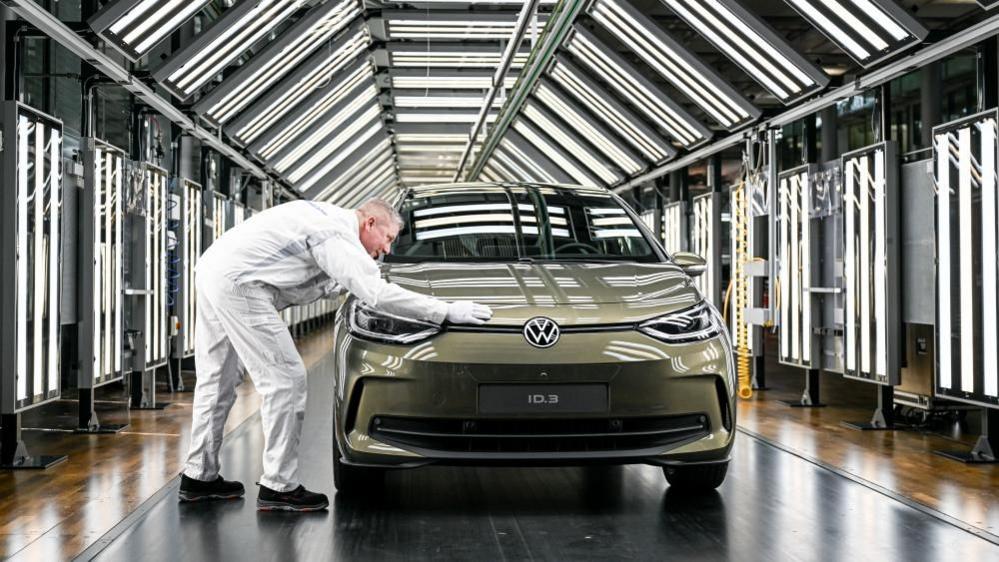
Norway is on the brink of making history by becoming the first nation to fully transition to electric vehicles (EVs) in the consumer automotive market. As of last year, an astounding 88.9% of new cars sold were electric, marking a stark contrast to the less than 10% adoption rates seen in some other countries, such as the UK and the US. The country's commitment to an all-electric future is underscored by a long-standing policy framework that encourages EV purchases while penalizing fossil fuel vehicle sales.
Harald A Møller, a prominent car dealership in Oslo, has completely shifted its inventory to electric cars, ceasing sales of fossil-fueled vehicles. Ulf Tore Hekneby, the dealership's chief executive, explains this radical change as a reflection of the public’s evolving mindset toward sustainable transport. "It's hard to go back," he states, highlighting the growing norm of electric vehicles in everyday life.
The roots of Norway's electric revolution stretch back to the 1990s, when governmental incentives were first introduced to support domestic electric vehicle manufacturers. Over the years, taxes on petrol and diesel cars have been increased significantly, making them less economically viable compared to their electric counterparts. Norway’s special treatment for EVs includes benefits like exemption from value-added tax (VAT), free parking, discounted tolls, and unrestricted access to bus lanes.
Although Norway is one of the largest producers of oil and gas, local policy hasn’t prevented the country from aiming for zero emissions in newly sold cars by 2025. "We believe we will reach that goal," assures Norway's Deputy Transport Minister, Cecilie Knibe Kroglund, citing the importance of long-term and predictable policies as a critical factor in their success.
Today, Norway boasts an extensive network of over 27,000 public charging stations, far surpassing the UK, which has a similar infrastructure despite its larger population. Moreover, the popularity of Norwegian EVs spans across multiple brands, with Tesla, Volkswagen, and Toyota leading sales last year.
Experts in Norway's EV movement, like Christina Bu of the Norwegian EV Association, argue that the key to successful adoption lies in policy, infrastructure, and public awareness rather than a pre-existing environmental mindset among citizens. With its vast resources and renewable energy—88% of Norway's electricity comes from hydroelectric sources—the country has facilitated a rapid shift away from internal combustion engines.
As Norway inches closer to the target of having 50% of all vehicles be electric in the upcoming years, both local and international communities are watching keenly to understand and apply successful strategies that can be adopted worldwide.
Harald A Møller, a prominent car dealership in Oslo, has completely shifted its inventory to electric cars, ceasing sales of fossil-fueled vehicles. Ulf Tore Hekneby, the dealership's chief executive, explains this radical change as a reflection of the public’s evolving mindset toward sustainable transport. "It's hard to go back," he states, highlighting the growing norm of electric vehicles in everyday life.
The roots of Norway's electric revolution stretch back to the 1990s, when governmental incentives were first introduced to support domestic electric vehicle manufacturers. Over the years, taxes on petrol and diesel cars have been increased significantly, making them less economically viable compared to their electric counterparts. Norway’s special treatment for EVs includes benefits like exemption from value-added tax (VAT), free parking, discounted tolls, and unrestricted access to bus lanes.
Although Norway is one of the largest producers of oil and gas, local policy hasn’t prevented the country from aiming for zero emissions in newly sold cars by 2025. "We believe we will reach that goal," assures Norway's Deputy Transport Minister, Cecilie Knibe Kroglund, citing the importance of long-term and predictable policies as a critical factor in their success.
Today, Norway boasts an extensive network of over 27,000 public charging stations, far surpassing the UK, which has a similar infrastructure despite its larger population. Moreover, the popularity of Norwegian EVs spans across multiple brands, with Tesla, Volkswagen, and Toyota leading sales last year.
Experts in Norway's EV movement, like Christina Bu of the Norwegian EV Association, argue that the key to successful adoption lies in policy, infrastructure, and public awareness rather than a pre-existing environmental mindset among citizens. With its vast resources and renewable energy—88% of Norway's electricity comes from hydroelectric sources—the country has facilitated a rapid shift away from internal combustion engines.
As Norway inches closer to the target of having 50% of all vehicles be electric in the upcoming years, both local and international communities are watching keenly to understand and apply successful strategies that can be adopted worldwide.