In brief
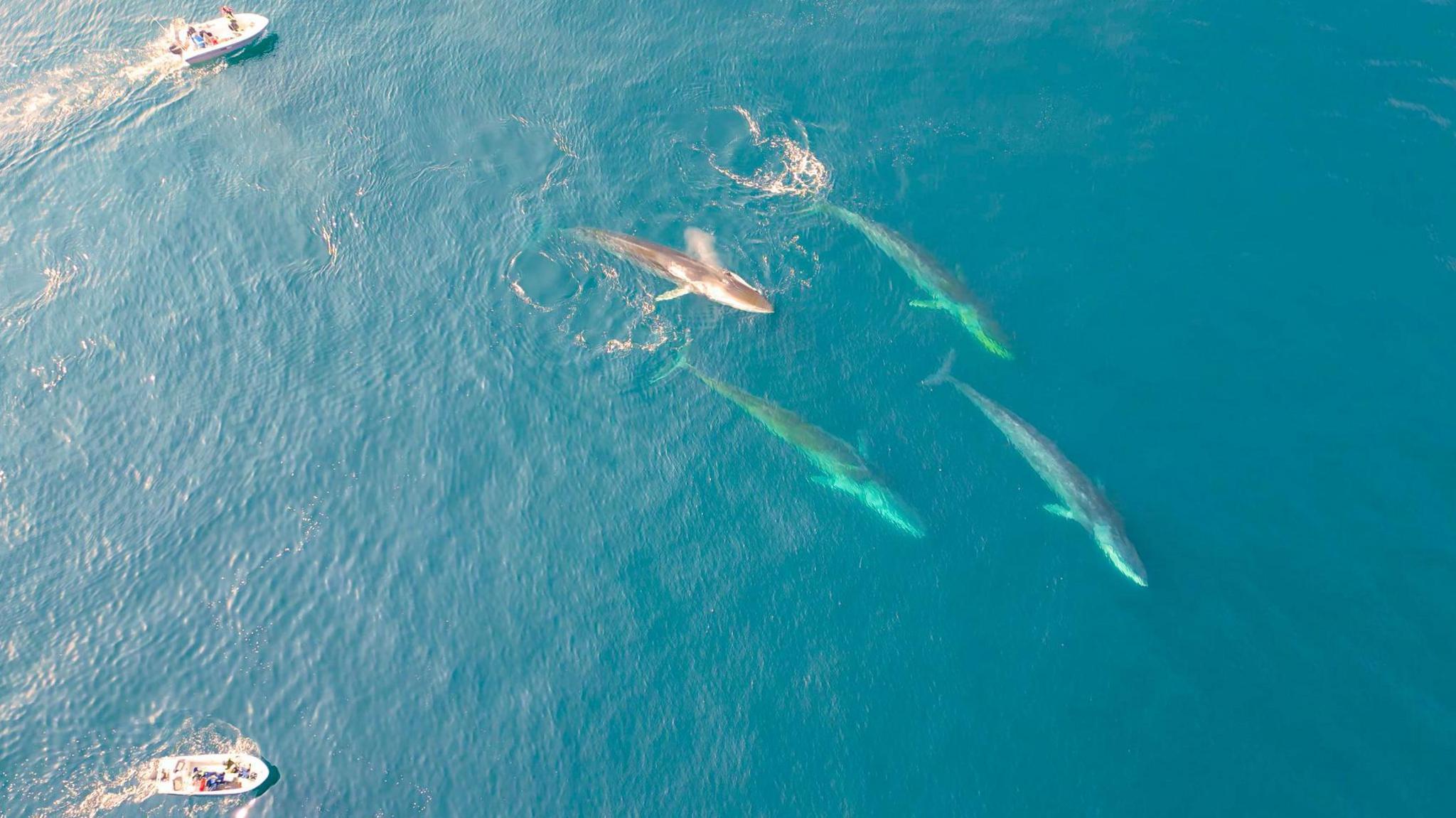
As sea ice retreats from East Greenland, enormous baleen whales are now entering waters that were previously inaccessible to them. Decades‑long surveys show that the numbers of humpback, fin and minke whales have risen dramatically, with satellite tracking and Inuit hunter testimony confirming an unprecedented migration. The “feeding frenzies” are driven by warmer sea temperatures and a surge of fish and krill, allowing whales to consume over 800,000 tonnes of prey each summer. While these giants may benefit, other Arctic species such as narwhals and belugas face habitat loss and increased competition. The findings, published in Frontiers in Marine Science, underscore how climate change reshapes marine ecosystems in the sub‑arctic.
When sea ice erodes from East Greenland, giant baleen whales that once rarely entered the region are now making seasonal forays into the newly open waters. This trend, documented through ship‑based surveys and aerial footage spanning two decades, reveals a dramatic shift in marine behaviour.
In 2006 no humpback whales were recorded near the coast, but eight years later the first seven sightings were logged; by 2024 the number of ship‑based sightings rose to 150. Combined with satellite tracking of 15 whales and reports from Inuit hunters, researchers describe these observations as a “major ecological regime shift”.
Scientists estimate that in the summer of 2024 roughly 4,000 humpbacks, 6,000 fin whales and 6,000 minke whales visited the Greenland Sea, together eating an estimated 800,000 tonnes of fish and krill. The new feeding frenzies are a direct consequence of rising sea temperatures and a resultant movement of prey species into the warming waters.
- Satellite‑tagged whales reveal seasonal migration patterns.
- Inuit hunters corroborate the change in whale distribution.
- Other Arctic mammals, such as narwhals and belugas, may lose habitat to the incoming baleen whales.
The study, released in the journal Frontiers in Marine Science, highlights how climate change can both create new opportunities for some species and jeopardise the survival of others. Prof Mads Peter Heide‑Jørgensen noted that the Arctic adaptation of these giants is “probably the most radical we can see anywhere in the subarctic.”