In brief
In a dramatic two‑day course held in the Brecon Forest, football coaches from across Britain—including ex‑Arsenal captain Aaron Ramsey and ex‑Chelsea goalkeeper Willy Caballero—learn to manage life‑and‑death scenarios. The programme, run by the Football Association of Wales, mirrors military drills to sharpen decision‑making, teamwork and crisis management. Participants face simulated ambushes, hostage‑rescue exercises, and tactical decision‑making under fatigue. The training, described as the "Harvard of football coaching", aims to equip managers with skills that will benefit them on and off the pitch.
The rolling Herefordshire hillsides are typically a pastoral calm, yet this week they became a scene of dramatics when a set of covert military training drills went wrong. Six coaches, all trained for the UEFA Pro Licence, were called to the front lines in an exercise designed to mimic the intensity of battlefield conditions.
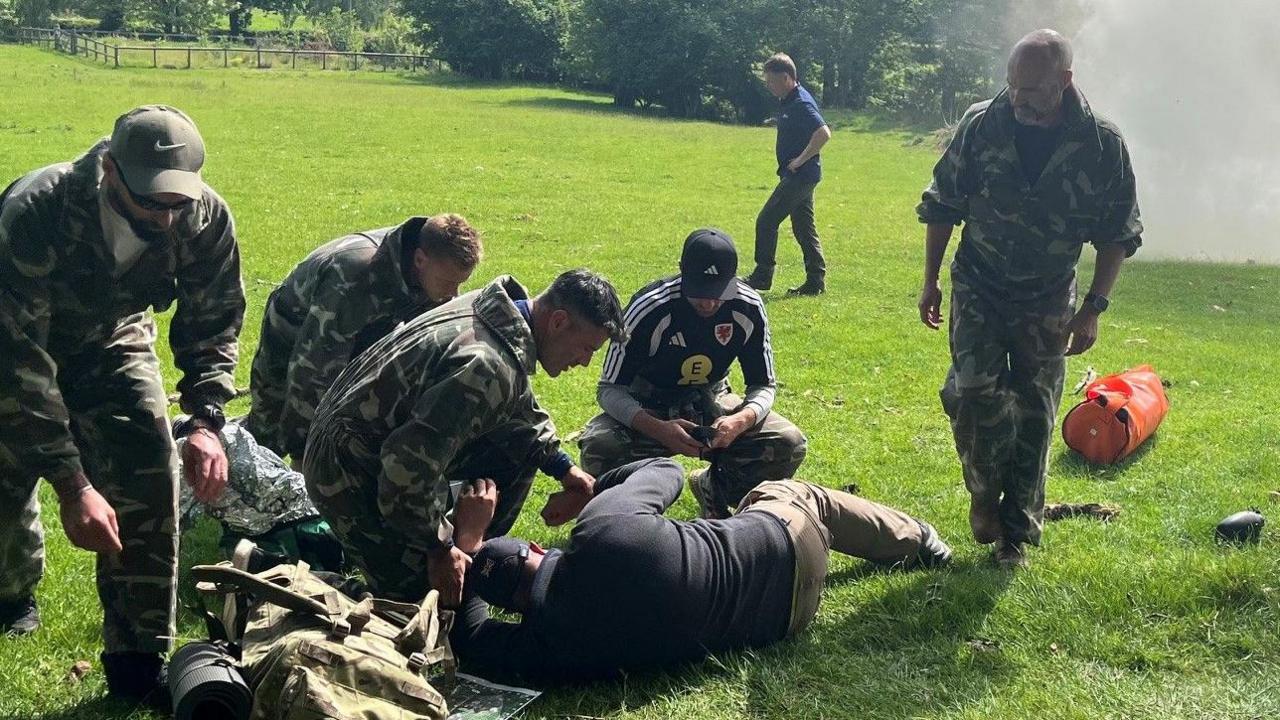
The briefing began with the crack of simulated mortars. Behind the attendance were former Arsenal captain Aaron Ramsey, ex‑Chelsea & Argentina goalkeeper Willy Caballero and David‑Covees manager Luke Williams, all breathing in the same shared tension that only soldiers can feel. Their task: impromptu first‑aid under fire, ensuring a damaged casualty was taken safely while neutralising hostile fake gremlins on the training ground.
To spice up the scenario, a life‑like test was staged with a foe pretending to suffer a severe injury. The blood, it turned out, was fake and the wounded was an actor—a former amputee soldier. The coaches were forced to manage the emergency, apply a tourniquet and coordinate extraction under time pressure.
The Programme, funded by the Football Association of Wales (FAW), has gained international recognition as the "Harvard of football coaching" – a reputation reinforced by graduates such as Mikel Arteta and Michael Bradley, who now lead clubs globally.
Participants trained under simulated ambush conditions had to rescue a hostage from a forested area while fending off would‑be adversaries. The exercise was run by former military commander Matt Johns, who explained the purpose: to expose coaches to high‑pressure environments, teaching them to think swiftly, maintain calm, and lead decisively.
Training sessions included the heavy burden of a 10‑kilogram load and were deliberately exhausting, designed to mimic the mental fatigue coaches face in high‑stakes matches.
The course did not shy away from the logistical demands of such intensive drills. Although Ella Masar, a Chicago Red Stars assistant coach, could only partially participate due to pregnancy, she played an active role in strategy planning for the virtual war room scenario set in a place named 'Breconia.'
Beyond the physical exercises, the program offers a reflective component where coaches analyze their decisions, translate lessons learned into coaching practice, and plan how to apply crisis‑management skills to their day‑to‑day roles in the dugout.
Joe Morrell, former Wales international, and Lee Bowyer, ex‑Leeds United midfielder, were among the cohort that underwent the tense exercises. Their involvement highlights the breadth of experience the FAW attracts, ranging from seasoned internationals to front‑line military personnel.
According to Johns, “The generic parts of leading under pressure are the same no matter your industry. The unique thing with football coaches is their drive to win and out‑perform.” He added that the training pushes participants beyond their comfort zone, allowing them to become more resilient leaders.
As the training wrapped up, the coaches walked out with an intensified understanding of pressure‑point decision‑making, a skill set they’re ready to bring into match strategies, day‑to‑day leadership, and ultimately, the footballing world.