In brief
New Delhi is battling a severe heatwave, with official air temperatures around 43 °C, but thermal imaging shows surface temperatures soaring to 64 °C. The gap between air and surface heat explains why people feel hotter than the official “real feel” says. Witness accounts from busy flyovers, street vendors and low‑neighbourhood homes show how residents cope with heat that climbs above 50 °C even at night. Health experts warn that prolonged exposure to such temperatures can cause heat exhaustion, confusion and even seizures. The city needs urgent measures, from shaded public spaces to advice on when labourers can work.
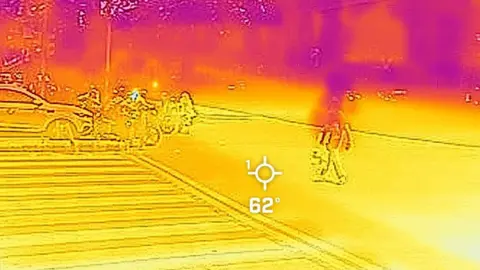
For weeks Delhi has been sweltering. While the Indian Meteorological Department logs 43.5 °C, a thermal camera raised by Greenpeace India measured up to 64 °C on concrete and traffic. The divergence between air temperature and surface heat explains why even a “real feel” of 48 °C feels hotter.
At the IIT flyover, Greenpeace researcher Nibedita Saha moved the camera from shaded under the bridge (42 °C) to a sun‑lit spot where idling bikes registered 64 °C. The surface temperature of the spot where the team stood was 61 °C, but stepping a few metres to a tree drop the reading to 39.8 °C. A few feet of shade can make a huge difference.
The city’s heat isn’t limited to transport hubs. A vendor, Sanjana Ben, who sells dry fruits from the pavement at Red Fort, had her face measured at 40 °C, but the ground right below her feet rose to 57 °C. “The ground feels hot and I sit down for a while. I can’t wait too long,” she said, describing periods of blurred vision and dizziness.

In Sundar Nagri, a low‑income neighbourhood, the camera recorded 42 °C outdoors and 40 °C inside a cramped two‑room home. Even without windows, a ceiling fan was barely cooling the space, leaving residents like Kajal and her brother Abhishek feeling like “standing next to an oven.” Their daily routine had shifted; Abhishek noted that everyone returns home late and sleep is disrupted. Nights are the hardest: they can’t sleep even with t‑shirts off because the interior heat is still intense.
Health experts point out that a core body temperature spike above 40 °C is dangerous. Dr A Fathahudeen warned of heat exhaustion and, in severe cases, organ failure and death if not treated promptly. He advises staying hydrated, wearing light clothing, using umbrellas and limiting outdoor work from 10:30 am to 3 pm. But for many Delhi residents, low wages do not allow them to skip daytime labour.
The heatwave has made Delhi’s urban landscape feel farther from the official statistics. Instead of merely a temperature reading, the temperature of surfaces—concrete, vehicles, unshaded streets—adds significantly to the felt heat, exposing millions to serious health risks. The city’s future will hinge on how quickly it can deploy shade, cooling spaces and policy to protect those who live and work on the streets during these extreme temperatures.