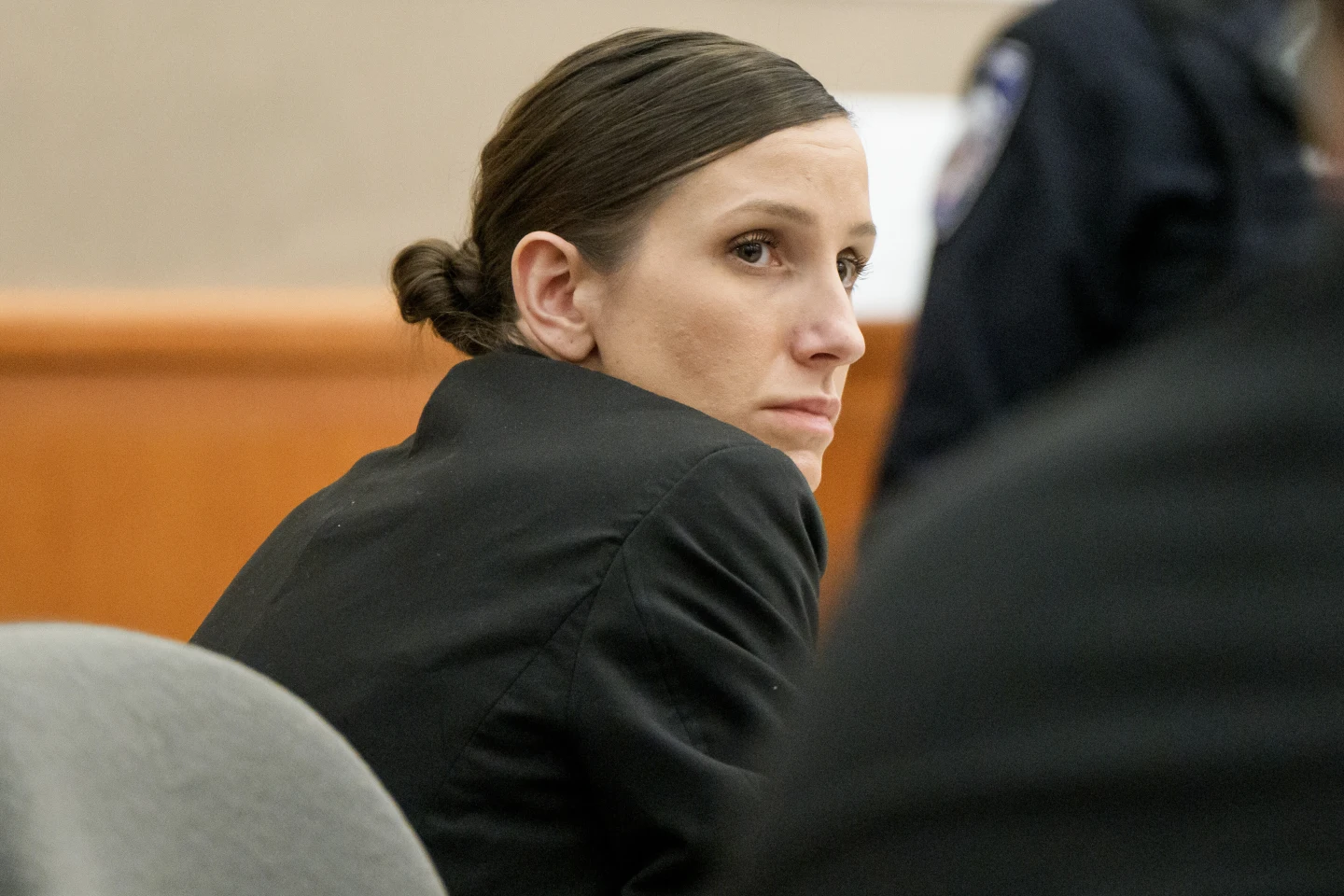
PARK CITY, Utah (AP) — Closing arguments are expected in the murder trial of Kouri Richins, a Utah woman who authored a children's book on grief following her husband's death. The trial has been marked by dramatic turns and serious allegations against Richins, who stands accused of killing her husband, Eric Richins, by administering a lethal dose of fentanyl.
The proceedings were significantly shortened after Kouri Richins waived her right to testify, leading her legal team to rest their case with no witnesses called. Her attorneys maintain that the prosecution has not established sufficient evidence to warrant a conviction.
According to prosecutorial claims, Richins, 35, deliberately infused fentanyl into a cocktail served to her husband, resulting in his death in March 2022 at their Park City residence. In addition to the murder charge, Richins is also facing allegations of fraud related to insurance benefits claimed posthumously and an earlier attempt to poison her husband with a fentanyl-laced sandwich.
The most serious charge against Richins entails aggravated murder, which could lead to a life sentence. Her defense intends to highlight perceived flaws in the prosecution's argument, positing that much of the evidence submitted relies heavily on speculation.
Prosecutors assert Richins had explored various financial motives, noting her reported multi-million dollar debt and alleged intent to secure her husband's substantial estate through his death. Text exchanges between Richins and a man thought to be involved in an extramarital affair indicated her fantasies about leaving her husband for financial gain.
In a twist of irony, shortly before her arrest last May, Richins had self-published a book intended to help children cope with their father's death. The prosecution has since leveraged the book's promotion as part of their narrative, arguing that it served as a calculated cover for her alleged crime.
Prosecutors also referenced an extensive digital footprint from Richins' phone, revealing searches on topics such as lethal doses of fentanyl and luxury prisons. This data has been central to constructing the narrative that she premeditated the alleged murder.
As the trial progresses towards its conclusion, many await the jury's decision, which could set a significant legal precedent. The emotionally charged case, arising from themes of grief, betrayal, and financial desperation, captivates public attention and raises questions surrounding domestic relationships and motivations.