In brief
Chinese authorities have introduced rules that require food‑delivery services to confirm the physical existence and licences of the restaurants they list. The move follows growing concerns over licence‑free ghost kitchens, a rise in food‑safety incidents, and aggressive competition that jeopardises rider welfare.
China’s food‑delivery platforms will now be obliged to confirm the licences and actual operating addresses of the restaurants they feature, following a new regulatory crackdown on the country’s ghost kitchens.
Ghost kitchens – takeaway‑only shops that have no front‑store and often operate under forged licences – have come under intense scrutiny after a series of safety incidents. The new rules, effective from Monday, mandate that every shop listing must match an existing physical store, and if a vendor does not offer dine‑in service it must explicitly state so.
The crackdown came after a man in Beijing complained to local authorities that a cake he ordered via a delivery app was topped with inedible flowers. Investigations revealed that the cake chain had listed nearly 380 locations on e‑commerce platforms yet held no physical store, and its online shops used counterfeit business licences.
Further probes uncovered that orders from such chains were routed through third‑party transfer platforms, which awarded the work to the lowest bidders. Authorities counted 3.6 million cake orders across two transfer sites and identified 67,000 ghost shops spread over seven major delivery platforms, forming an illegal supply chain that was colluded with the platforms themselves.
“If we are too strict in our review, the merchants will move to other platforms,” one staff member from a delivery app told officials, hinting at the fierce competition that fuels the industry’s rushed‑service culture.
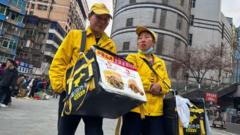
The government has warned that price wars have driven app operators to the bottom of the market, leaving riders to rush deliveries for low pay. In April, the State Administration for Market Regulation fined seven e‑commerce giants – including Taobao, JD.com, Meituan and Pinduoduo – a total of 3.6 billion yuan ($530 million) mainly over ghost deliveries.
In response, some merchants are taking safety‑assurance steps. More than 20 takeout stalls in Hangzhou have installed transparent kitchens that stream live cooking, while authorities in Anhui province have signed safety agreements with Meituan, Taobao and JD.com, using AI models to monitor kitchens and rewarding riders who expose illegal restaurants.