In brief
Tesla is navigating turbulent waters as a growing number of consumers express disapproval over CEO Elon Musk's controversial actions and political engagements, which may be impacting the brand's reputation and sales.
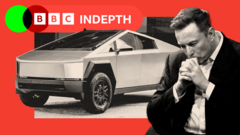
Ben Kilbey's love for his Tesla Model Y is overshadowed by his disapproval of Elon Musk's recent actions, particularly as he leads the newly established Department for Government Efficiency (DOGE) aiming to slash federal spending. Kilbey, a communications professional advocating for sustainability in the UK, represents a rising tide of dissatisfaction among Tesla owners and potential buyers who feel alienated by Musk's polarizing behavior.Protests against Musk have erupted across the globe, igniting demonstrations outside Tesla dealerships in countries such as the US, Canada, Germany, the UK, and Portugal. While most protests have remained peaceful, instances of vandalism and violence have raised alarms in multiple regions. In the US, the launch of the Tesla Cybertruck has been particularly contentious, becoming a canvas for anti-Musk sentiment in various social media videos.Former President Donald Trump has stood in support of Tesla, labeling any violence against its showrooms as "domestic terrorism" and asserting that Tesla, known for producing electric vehicles, is undeserving of such abhorrent attacks. Musk echoed this sentiment in a recent Fox News interview, decrying the level of violence directed at Tesla and its products.Despite its Model Y being the world's best-selling car last year, Tesla's total sales fell for the first time in over a decade, with reported profits declining as well. In Europe, the company faced a staggering 45% drop in new registrations early this year. Wall Street analysts, like Joseph Spak from USB, suggest that sales could further decline by 5% in 2024, a stark contrast to previous expectations of growth.Research indicates that Musk's increasingly political rhetoric has negatively impacted Tesla's reputation, especially in the EU and Canada, although opinions in the US appear more divided. High-income potential EV buyers are expressing diminishing interest in the Tesla brand, a shift that could have long-term ramifications for the company.While Musk's influence initially proved invaluable during Tesla's rise, his recent political display, alongside the company's aging product lineup, raises concerns about the path ahead. Challengers such as established automakers and emerging Chinese EV brands are rapidly encroaching on Tesla's market share.Further complicating matters, Musk's ambitious plans for driverless technology have faced skepticism, with previous optimistic projections failing to materialize. As Tesla grapples with leadership challenges across multiple ventures—ranging from the social media platform X to SpaceX—the need for focused leadership within Tesla has become increasingly apparent.Investors remain hopeful for a pivot in company strategy. Some are calling for new leadership within Tesla, with industry experts suggesting that fresh perspectives could help navigate the company's current landscape, mitigate Musk's political influence, and refocus its vision on innovation—potentially widening its appeal in an increasingly competitive market.