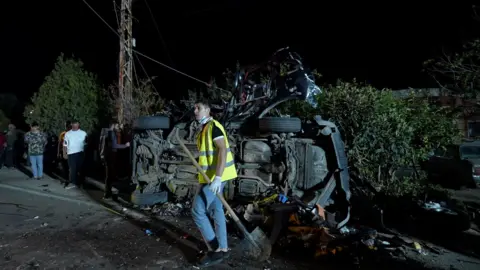
Last Friday, an Israeli air strike targeted a car in Froun, a village entrenched in the Shia heartland of southern Lebanon, showcasing the ongoing hostilities despite a declared ceasefire. Witnesses recount the aftermath, with the community grappling with the grim realities of conflict—body parts scattered, and a palpable air of fear.
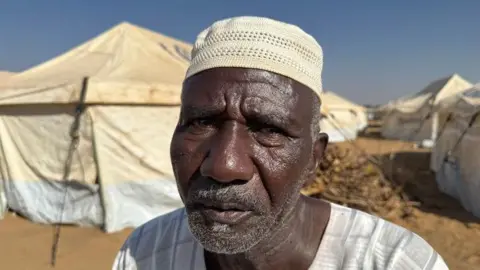
Who is going to help us? questioned local resident Mohamad Mokdad, epitomizing the despondency found in the area, which once thrived under Hezbollah's influence. Israel insists these strikes aim to limit Hezbollah's ability to rebuild militarily after suffering heavy losses in the previous war, yet the ongoing violence has left the community shattered and questioning their long-standing loyalties.
The conflict's roots run deep, as signified by the recent ceasefire brokered by the US and France, intended to draw down hostilities and restore some semblance of order after the devastating 13-month war. The reality is stark, with over 330 lives lost since the ceasefire came into effect, and a growing number of residents left displaced, without hope for a return to normalcy.
While officials claim progress on disarmament of Hezbollah, uncertainty lingers. Community members express fatigue over the endless cycle of violence, with voices emerging that once were muffled under the weight of political loyalties. As the situation unfolds, the shadow of conflict continues. Many families, isolated and fearful, long for an elusive peace that seems only to further slip away.