In brief
The landing of Blue Ghost signifies a milestone in lunar exploration, foreshadowing an era of increased private involvement in space missions.
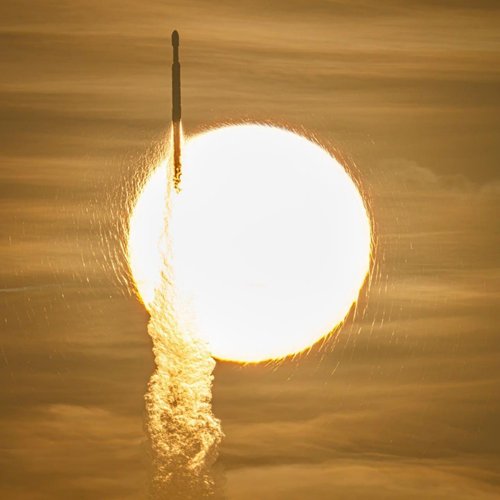
In a remarkable achievement, the private spacecraft Blue Ghost has successfully landed on the Moon, making history as only the second commercial vehicle to reach the lunar surface. Blue Ghost launched from Earth on January 15th, courtesy of the American aerospace firm Firefly Aerospace, with its mission centered on exploring the Sea of Crises, a massive crater visible from Earth.This venture is part of an ongoing collaboration between NASA and various private enterprises seeking to expand lunar exploration capabilities. Another private company, Intuitive Machines, is gearing up to land its Athena space vehicle near the Moon's south pole within the next few days. Notably, Intuitive Machines was the first private entity to accomplish a lunar landing when its spacecraft Odysseus reached the surface on February 22nd last year, although not without its challenges, as the vehicle ended up toppling due to landing gear failure.Unlike its predecessor, Blue Ghost executed a successful and smooth landing after spending two weeks in lunar orbit. Firefly Aerospace's headquarters in Texas erupted in cheers upon receiving confirmation of the successful landing. Dr. Simeon Barber, a researcher in planetary sciences at the Open University, emphasized that Blue Ghost represents the first successful private mission to the Moon, demonstrating intact and operational landing technology reminiscent of the Apollo missions that once dominated lunar exploration.Dr. Barber explained the significance of the Moon for private firms, as it serves as a testing ground for technology that can function in the harsh conditions of space. By mastering operations on the Moon, companies can learn to deploy robotic instruments capable of enduring extreme temperatures and radiation.He also hinted at the possibility of humans returning to the Moon, noting that there has been a long hiatus due to funding constraints, with the last manned mission being Apollo 17 on December 19, 1972. Dr. Barber stressed the critical success of these missions while acknowledging their short duration and high costs, which made sustainable exploration challenging.The introduction of private companies is seen as a way to lower costs through competition. Innovations from these firms may lead to the development of more affordable landers and the utilization of lunar resources, such as water, which could support astronauts on future missions.Astrobotic Technology, another US company, attempted to reach the Moon in January 2024 but unfortunately faced a fuel leak, resulting in its lander crashing back to Earth and disintegrating upon descent into the southern Pacific Ocean. As private companies step into the spotlight of lunar exploration, new possibilities are emerging for the future of space travel and the utilization of the Moon as a stepping stone for broader galactic adventures.