In brief
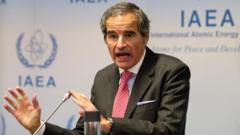
The Director General of the International Atomic Energy Agency (IAEA), Rafael Grossi, voiced serious concerns regarding Iran's uranium enrichment activities, noting that the country is significantly ramping up its stockpile of highly enriched uranium. This troubling development raises fears about the potential for Iran to pursue a nuclear weapons program.
In an interview, Grossi disclosed that Iran is enriching uranium to 60%, a level just shy of what is needed to construct a nuclear weapon. The escalation in uranium production, particularly at the Fordow nuclear facility, is perceived as a response to Iran’s recent military struggles in the region, especially in conflicts involving Syria, Lebanon, and Gaza.While Grossi acknowledged that certain Iranian politicians advocate for the development of nuclear arms, he pointed out that current leadership does not appear intent on pursuing this "path of choice." His comments came during the Manama Dialogue conference held in Bahrain, where he advised Israel against any military attack on Iran's nuclear sites, citing "very serious" repercussions.According to a recent IAEA report, inspections have confirmed increased uranium processing at the Fordow facility, projecting a surge in 60% enriched uranium production to approximately 34 kilograms per month, a dramatic increase from previous figures. The IAEA has called for the implementation of stricter safeguards at Fordow to ensure transparency in Iran's nuclear activities.Despite Iran's consistent denial of any military nuclear intentions, Grossi emphasized the advancements in Iran's nuclear program over the last decade, warning that a much faster ability to obtain nuclear weapon capabilities could soon emerge if the current trajectory continues. After engaging with Iranian officials, Grossi was assured that Iran would attempt to constrain its production of enriched uranium.As this dilemma unfolds, Grossi noted the rising global inclination towards nuclear armament, revealing concerns that more nations are contemplating the acquisition of nuclear capabilities in response to geopolitical tensions. The nuclear proliferation framework is increasingly strained, as established nuclear states modernize their arsenals, prompting smaller nations to question their own security in an uncertain international environment.