In brief
In the lead-up to the 2028 Olympic Games, Los Angeles is striving to embrace cycling culture by introducing extensive bike lanes to ease the city's traffic woes. While initiatives like the "Twenty-eight by '28" plan have garnered significant support, resistance remains in a city long dominated by cars.
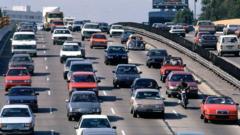
Los Angeles is notorious for its car-centric lifestyle, a reality it hopes to transform before the upcoming 2028 Olympic Games. Despite its ideal cycling climate, the city struggles with a mere 1% of its population commuting by bike. Damian Kevitt, director of Streets Are For Everyone (Safe), believes the ongoing changes could entice more Angelenos to adopt cycling as a viable mode of transport, stating, "This is long overdue." As the city gears up to accommodate hundreds of thousands of visitors for both the 2026 World Cup and the 2028 Olympics, enhancing accessibility through expanded bike lanes has become a priority. The "Twenty-eight by '28" initiative, established in 2017, aims to broaden the transit network and introduce safer biking environments, while recent voter support has reinforced the city’s commitment to creating more walkable spaces.However, the transition has faced pushback. Many residents, like Darin Drabing from Forest Lawn Cemetery, argue that the introduction of bike lanes exacerbates traffic congestion. Concerns about increased vehicular delays fuel skepticism among habitual drivers about acknowledging bike lanes as beneficial. Historically, bike lane projects have met mixed receptions. Cities like Paris and London have successfully integrated protected bike lanes, but areas like Toronto have faced initiatives to dismantle them after facing backlash. In Los Angeles, residents express frustration with newly established bike lanes along key routes such as Hollywood Boulevard, where car lanes have been reduced to one in each direction, prompting mixed reactions on cycling options. Notably, cyclist Mimi Holt, who returned to biking for health reasons, echoes optimism about future connectivity among bike lanes. Encouraged by possibilities for a more interconnected path system, she expressed a desire to forgo her vehicle altogether. Despite the broad push for transit reform, completion timelines for the planned 100 miles of new bike lanes raise further concern. To date, only five of the proposed projects have been finished, while federal support remains uncertain. Los Angeles Mayor Karen Bass has sought an additional $3.2 billion from the federal government to bolster these efforts.As many Angelenos remain hesitant to abandon their vehicles, advocates continue to promote shifts towards sustainable transit. While the ambition of a "car-free" Olympics may seem daunting in the context of LA's sprawling layout, Mayor Bass remains hopeful that these transportation changes will catalyze lasting impacts beyond the Olympic spotlight.