In brief
With girls banned from school since the Taliban took power, many Afghan women are now relying on the carpet weaving industry as their only source of income. The challenging economic landscape has led to a surge in demand for carpets, but workers face dire wages and long hours.
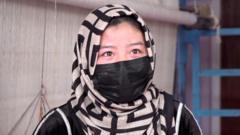
In Kabul's cramped workshops, the sounds of looms fill the air as hundreds of women and girls labor tirelessly to create intricate carpets. Among them is Salehe Hassani, 19, who reflects on how education is no longer a possibility. "We girls no longer have the chance to study," she says with a bittersweet smile. The stark reality set in after the Taliban seized control in 2021, imposing a ban on education for girls above the age of 12 and restricting women's access to various professions.Under Taliban governance, labor statistics have taken a downturn, with female workforce participation plummeting to alarming lows. The United Nations has indicated that the plight of women has worsened, forcing many into long hours of labor within the carpet weaving trade, one of the few industries remaining open to them. An estimated 1.2 to 1.5 million Afghans depend on this ancient craft for their livelihood, with women comprising approximately 90% of the workforce.Despite the global demand for Afghan carpets—over 2.4 million kilograms valued at $8.7 million were exported in just the first half of 2024—local weavers receive a mere fraction of the profits. Some report earning only $27 for crafting a square meter of carpet, a job that can take a month of intense work. This yields less than a dollar a day, forcing many workers into a cycle of poverty as they struggle to support their families.The head of Elmak Baft company, Nisar Ahmad Hassieni, claims to provide better compensation, paying employees between $39 and $42 for every square meter, under the condition of an eight-hour workday. Despite these efforts, the overall economic landscape remains grim, compounded by the Taliban’s ongoing promises of educational reforms without any real progress.Among the weavers, 22-year-old Shakila, once dreamed of becoming a lawyer. Now, she runs her family's carpet-making operation alongside her sisters, with their father’s earlier teachings in weaving becoming vital survival skills. They reside in the struggling Dasht-e Barchi area, where the dire economic realities have curtailed their aspirations.The Taliban's return has not only impacted their education but also left emotional scars. Shakila's sister, Samira, endured traumatic experiences after bombings targeted their school in 2021, which killed many of their classmates and led to their withdrawal from studies. Now, she grapples with the desire to return to school, hoping for safety and a chance to achieve her dreams.Yet, resilience shines through the dim circumstances. Salehe, determined, discreetly studies English, fostering hopes of pursuing a medical degree and building a world-class hospital in the future. "Even though schools and universities are closed, we refuse to stop our education," she asserts, embodying the tenacity of these young women confronting adversity in their quest for a better life.