In brief
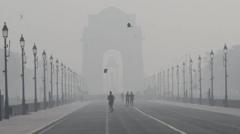
In recent days, the capital of India, Delhi, has witnessed a significant decline in air quality, plunging into the "very poor" and "severe" categories. This alarming deterioration has seen pollution levels spike to over 25-30 times the safe limits recommended by the World Health Organization (WHO) in various city areas. Experts caution that the air quality is likely to worsen in the days ahead, influenced by adverse weather conditions, increased use of firecrackers during the impending Diwali festival, and the burning of crop residue in nearby states.
Every winter, Delhi and numerous northern cities experience a surge in air pollution between October and January, disrupting lives and leading to the closure of schools and businesses. Recent data from the government-backed Safar website highlighted that levels of PM 2.5, the tiny particulate matter harmful to lung health, reached an alarming 350 micrograms per cubic metre. The pollution is classified as "very poor" at PM 2.5 levels between 300 and 400, and "severe" when they reach 400-500.The persistent issue of thick winter smog in Delhi results from a toxic cocktail of smoke, dust, low wind speeds, vehicle emissions, and agricultural burning from states like Punjab and Haryana. Farmers resort to burning crop stubble to clear their fields, citing a lack of financial and technical support to pursue alternative methods. Despite government initiatives, these strategies have largely fallen short of effectiveness.As Diwali approaches, the traditional use of fireworks exacerbates the existing pollution crisis. Although the Delhi government has formally prohibited fireworks manufacturing, storage, and sales ahead of the festival, compliance remains inconsistent, with many sourcing them from neighboring states.To mitigate air pollution, the Delhi government has implemented the Graded Response Action Plan (GRAP), enacting bans on coal and firewood usage in non-emergency circumstances and restricting diesel generator operations. Authorities have advised residents to limit outdoor activity and intensified their promotion of public transport to reduce vehicular emissions. The government has also launched initiatives to control construction activity within the city limits, aiming to combat the persistent air quality crisis.