In brief
A wave of demonstrations in cities such as New York, Chicago, Boston, Miami, and Los Angeles rallied against the U.S. blockade of Cuba. Organized by the National Network on Cuba and allied groups, the protests highlighted the growing international pressure that ultimately led the UN General Assembly to adopt a resolution calling for an end to the blockade. The movement garnered support from labor unions, religious communities, and cultural centers, with prominent voices urging clarity on the issue.
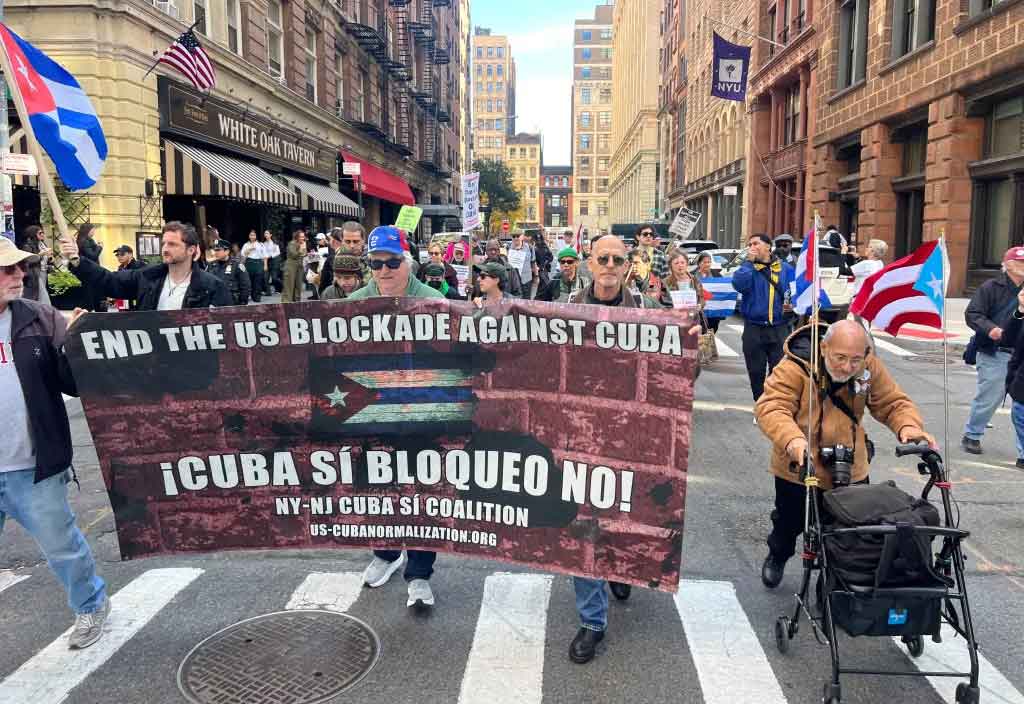
On Sunday, October 28, thousands of people in New York City, Chicago, Boston, Miami and Los Angeles gathered to demand that Washington lift its sixty‑plus‑year blockade against Cuba, while the United Nations General Assembly adopted a resolution condemning the siege.
A Nationwide Outcry
From October 24 to 31, the National Network on Cuba coordinated a series of public actions that the outlet called a “Global Week of Action against the US‑imposed genocide in Cuba.” The organization called on citizens to march, display signs and hold dialogues that would finally bring the blockade into focus at an international level.
In New York City, protesters marched down 6th Avenue and gathered at the Christopher‑Columbus plaza, chanting slogans and holding pro‑Cuba banners. The demonstration drew a diverse group of activists, students, and community members who pledged support for the Cuban people.
The Chicago Cultural Center hosted an interactive presentation on October 24. Speakers from the National Network on Cuba shared testimonies of Cuban families affected by the blockade, and local audiences participated in workshops that highlighted the economic and humanitarian toll of the policy.
On October 26, a rally at the First Baptist Church in Jamaica Plain, Massachusetts, invited faith leaders to speak on the moral implications of the blockade. Congregants and protestors stood side by side, holding candles in a silent tribute to those suffering in Cuba.
MIT in Boston offered a forum on October 27, where academics and students presented research on the blockade’s impact on Cuban students and researchers. The event featured a panel that included guest speakers from the Cuban diaspora and activists from Cuba.
In Miami, around 50 supporters gathered by the “Torch of Friendship” monument on October 28. Activist Pete Seidman reported that the crowd “expressed unity with the international community in calling for an end to the siege.”
Radio Miami covered a simultaneous demonstration at Federal Plaza in Chicago, where participants shouted slogans against Washington’s “attempts to suffocate the Cuban people.” Representatives of the City Council met with organizers to listen to their grievances.
Elsewhere in Los Angeles, activists affiliated with Workers United, a Service Employees International Union entity, gathered to denounce the blockade. Labor unionists marched from the Los Angeles Public Library to the headquarters of the U.S. Treasury, calling for policy change. Mark Friedman, a union organizer, noted that the turnout “showed a broader resistance to the US‑imposed siege.”
At 8:30 pm EST, the UN General Assembly filed a resolution urging the United States to lift the blockade. The vote held under the intense global spotlight from the protests, and a majority of member states signed the resolution, marking a historic endorsement of the Cuban people’s rights.
In the words of Savon Boyd, a spokesperson for CodePink and All Power Books, Florida civil rights group that the Cuban press calls “silent genocide”:
"I want you to understand something with absolute clarity: the U.S. fuel blockade is not an abstract political debate,"
Boyd added that the flight from abstract politics to concrete action was essential for ending the long‑standing siege that has strangulated Cuba for more than 65 years.