
In brief
As tariffs escalate, both the United States and China are navigating a complex trade landscape marked by strategic responses and potential shifts in global alliances.
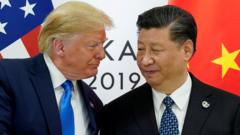
In response to the recent imposition of a 10% tariff on all Chinese goods by U.S. President Donald Trump, China has remained surprisingly measured, concealing any overt anger. Canadian Prime Minister Justin Trudeau and Mexican officials have promised retaliation against Trump's tariffs, with Trudeau already announcing a substantial 25% tax on over $100 billion in American imports. In contrast, Beijing has opted for restraint, advocating for dialogue and compromise rather than confrontation.The backdrop of Trump's trade policies is shaped by previous tariffs targeting Chinese products. This latest tariff marks just one more step in a broader agenda that has already placed significant financial strains on tens of billions of goods exchanged between the countries. According to Chong Ja Ian from Carnegie China, Beijing is likely calculating that it can absorb the 10% levy without engaging in a costly trade war.President Xi Jinping may see an opportunity in Trump’s divisive approach. As Trump threatens tariffs on close allies such as the European Union, China is poised to present itself as a stable trade partner in a world rattled by American nationalism. Experts like Yun Sun from the Stimson Centre suggest that Xi's message of “win-win” globalization resonates amid the apparent decline in U.S. leadership. In regions like Africa, South America, and Southeast Asia, China is cementing trade relations, even as it steps in to cover the void left by U.S. aid cuts during Trump’s presidency.The geopolitical dynamics are shifting. China's aggressive pursuit of new partnerships and its commitment to international institutions highlight its aspiration to reshape the global order, especially in the wake of perceived U.S. withdrawal. Historical perspectives from figures like John Delury suggest that Trump’s policies indicate the U.S. as increasingly uninterested in fostering international collaboration, potentially clearing the path for China's ascendance.The situation also compels nations in Asia, particularly Japan, South Korea, and Australia, to reconsider their ties with both Washington and Beijing. Wary of China's ambitions, these nations are contemplating stronger trilateral ties to uphold their interests amid rising regional tensions.As the lunar New Year celebrations wrap up in China, its government is expected to finalize its responses to the new tariffs. While the Chinese commerce ministry has indicated plans to challenge the tariffs through the World Trade Organization (WTO), the organization's capacity to mediate is compromised by previous U.S. actions under Trump's leadership.Looking ahead, the relationship between the U.S. and China may face substantial upheaval, as experts like Wu Xinbo predict that Trump's unpredictable style could create rifts despite efforts for stabilization. The delicate balance of trade, diplomacy, and economic strategy will undoubtedly shape the future of global relations as both presidents confront new realities in their countries' international standings.

