In brief
Qatar’s Prime Minister Sheikh Mohammed bin Abdulrahman bin Jassim Al Thani urged on November 7 that the United States and Iran should not wait for a “perfect moment” to negotiate peace, as two missiles struck Qeshm Island in the Strait of Hormuz with no casualties reported. The U.S. State Department warned travelers in the Middle East of increased Houthi attacks and Iranian threats, while Iranian officials warned of serious retaliation against any misstep by U.S. or Israeli forces. Additional Israeli–Iranian confrontations and Iranian distribution of iodine tablets to communities near nuclear facilities have intensified the conflict.
In the waning days of the conflict that has left air-traffic routes in the Persian Gulf clogged with warheads, the people living on Iran’s Qeshm Island were among those finally hit by the flare‑up on November 7.
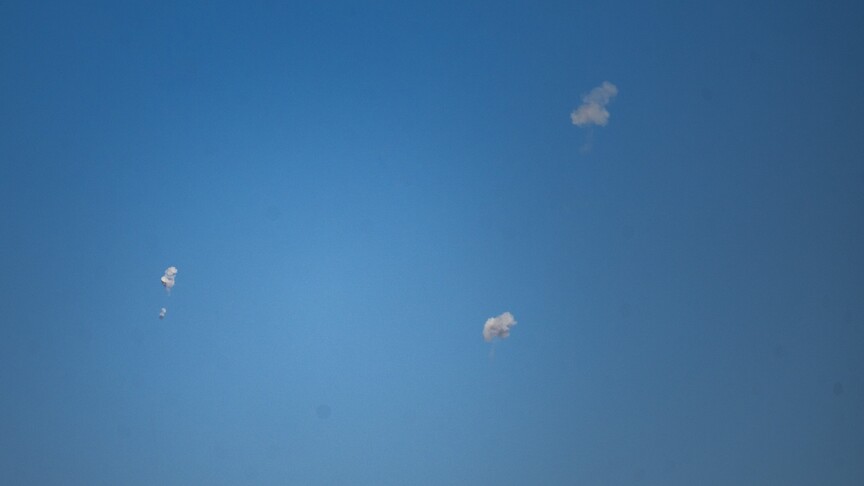
According to Iran’s official news agency IRNA, two missiles struck the island in the Strait of Hormuz. Local media reported that no civilians were injured and that the blasts caused only minor damage to infrastructure. Residents in the surrounding villages, however, reported a falling silence as the shockwave rattled the coastline.
The same evening, Qatar’s Prime Minister and Foreign Minister Sheikh Mohammed bin Abdulrahman bin Jassim Al Thani, speaking on an interview held at Oxford University, shocked the international community by saying that the United States and Iran must not wait for a “perfect moment.” He warned that the ongoing war could not afford any further delays.
“We cannot afford to wait for a ‘perfect moment’ to reach a peace deal,” he said.
A few hours later, the US State Department weighed in by sending a warning to its citizens in the Middle East. The statement cautioned Americans about a heightened threat of armed attacks from Yemen’s Houthi group and raised concerns that Iranian forces might target American officials in the region. The alert also urged travellers to verify country‑specific security updates and warned of potential flight cancellations and airspace closures.
Contact between the United States and Iranian representatives, however, continued according to the statements of US President Donald Trump. Trump said that talks were underway following a call with Qatari Emir Sheikh Tamim bin Hamad Al Thani, a move that was meant to encourage a diplomatic resolution.
Meanwhile Iranian governmental officials poured out their own set of warnings. Ebrahim Azizi, Iran’s parliamentary security chief, said that the US and Israel must face consequences for their involvement in the war. He promised a decisive Iranian response to any mistake from the US, and insisted that US forces would not depart the region without a ‘price’ being paid. These remarks came on the same day that Iranian authorities began distributing iodine tablets to communities surrounding its nuclear facilities—a move that was reported by the Times of London, which quoted an unnamed Iranian official saying the distribution was a precautionary step in case of future US strikes.
Finally, journalists covering the region reported that Iranian distribution of the tablets was a sign of how the country is preparing for an escalation that might involve direct attacks against its strategic sites.