In brief
In the Gaza Strip, a sudden downpour has flooded roughly 70,000 tents used by displaced Palestinians, leading to injuries and leaving many without adequate shelter. Authorities report 1,500 distress calls and say shortages of fuel and damaged pumping equipment have limited response capabilities. While Israel's military agency claims it has stepped up sanitation efforts, the Hamas‑run Gaza government accuses Israel of withholding materials necessary for rebuilding shelters.
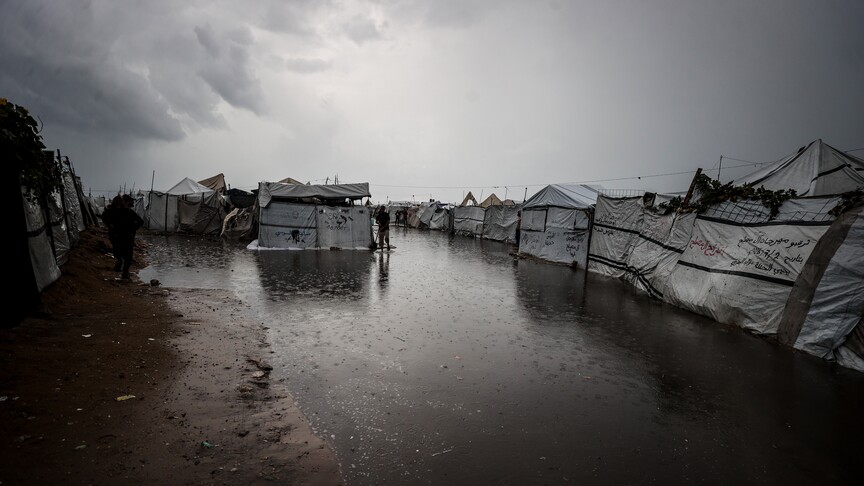
In the Gaza Strip, a sudden shower that began on Saturday night dumped a deluge on thousands of tents that house the displaced. According to the Hamas‑run Gaza government media office, about 70,000 tents were flooded within 12 hours, putting tens of thousands of people in immediate danger and resulting in several injuries, though no deaths were reported.
The civil‑defence service recorded 1,500 distress calls from residents who were trapped or in need of aid. Three abandoned houses that had stood in the open air collapsed, yet no injuries were reported from the collapses. In Gaza City’s tent encampment, some shelter‑owners tried to salvage their structures by using sand to line the walls and keep water out, while others moved children out of the wet tents to manage on the ground.
One resident, Olfat Magdoub, spoke to reporters for Gaza’s local news and described the worsening situation. She added: "This is the first day of rain, and of course we are already flooded. What will happen if it rains again the next day? This is only the first day and we’re already overwhelmed." She recalled a prior rain event two weeks earlier when she slept on blankets on the floor because the water had soaked the bedding, and now the mattresses were wet and she sleeps on the ground again.
The shortages that are hampering relief operations are rooted in the broader conflict’s impact on Gaza’s infrastructure. Municipal and civil‑defence officials say that the war has left the territory without sufficient fuel and that many pumps and heavy vehicles were destroyed by Israel. The destruction of bulldozers and other equipment has made it difficult for responders to drain or rebuild the damaged shelters.
Hamas officials blame Israel for blocking the delivery of construction materials and for the destruction of vital equipment. Israel’s coordinating agency, COGAT, issued a statement on Friday saying it had increased sanitation efforts across Gaza prior to the downpour, working with international organisations. The agency added that four vacuum trucks entered Gaza this week through the International Committee of the Red Cross, joining eight brought in over the past month to service sewage problems.
The International Middle East Media Center’s report on November 7 notes that the flooding has exposed the poor condition of Gaza’s temporary shelters. Many families are living in tents that have been worn by prolonged use and harsh weather, making them particularly vulnerable to the sudden weather changes that have rolled in from the north.
With the rains continuing into the morning and the damage extending beyond the tents to damaged water pumps, the humanitarian crisis is set to deepen. Relief agencies are calling for immediate assistance and for sustained support for the displaced community that now relies almost exclusively on temporary shelters for their daily survival.