In brief
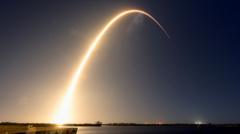
On Wednesday, the Falcon 9 rocket successfully launched from Kennedy Space Center in Florida at 01:09 local time (06:09 GMT), carrying two lunar landers from Firefly Aerospace in the US and ispace from Japan. This marks a significant milestone in the commercial exploration of the Moon, as these landers are set to operate independently once they reach lunar orbit.
Firefly's lander, named Blue Space, is anticipated to take approximately 45 days to arrive at the Moon, where it will drill, gather samples, and capture X-ray imagery to enhance our understanding of Earth's magnetic field and space weather dynamics. Concurrently, the ispace Resilence lander is expected to reach the lunar surface in up to five months, equipped to deploy a rover and collect surface materials known as regolith. This initiative has garnered NASA's support, potentially positioning it as the agency's largest commercial lunar delivery to date. Last year, Intuitive Machines achieved the distinction of being the first private entity to successfully deploy a lander on the Moon, a milestone previously achieved only by space giants like the US, USSR, China, India, and Japan. Additionally, SpaceX is gearing up for the seventh orbital flight test of its Starship rocket, scheduled to launch from Texas at 16:00 local time (22:00 GMT) later today. This series of missions underscores an exciting new era of private space exploration aimed at lunar and beyond.