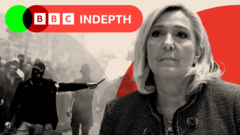
Marine Le Pen's recent court ruling banning her from running for office until 2027 has fueled intense outrage among France's far-right factions. The leader of the National Rally (RN) has called the decision an affront to democracy and institutions, likening her situation to political persecution. This episode highlights the growing tension within French politics as the far-right seeks to leverage this setback, raising questions about its implications for the future.
In the aftermath, Le Pen and her allies have made bold statements claiming that their democratic rights have been severely compromised. During a press conference, Le Pen denounced the judiciary's role as a political adversary, presenting herself as the victim of a conspiratorial scheme against her and her party. A recent poll, however, indicated that just over 31% of the populace viewed the ruling as unjust, with many acknowledging that her misdeeds warranted the legal consequences.
Entering this turbulent political arena, Prime Minister François Bayrou admitted his unease about the potential fallout. Still, other centrist political figures consolidated their stance in favor of the separation between justice and politics. The situation poses a dilemma for the already fragile coalition government facing the potential threat posed by Le Pen's RN.
As the political narrative develops, the impact of Le Pen's sanctions may not be as clear-cut as her supporters hope. Despite previous polls showing interest in her candidacy, nothing is set in stone for the 2027 elections, which remain two years away. It's vital to note Le Pen's history of increasing vote share, although current dynamics create uncertainty.
The severity of the recent court rulings and their implications for Le Pen's reputation raise questions about her political viability. Critics argue that she and her party failed to demonstrate awareness or accountability regarding ethical standards in governance, which contributed to the court's harsh verdicts against them.
Further complicating matters is the discourse surrounding political corruption in France. While Le Pen has historically spoken against corruption, her current predicament is underscored by legislative actions against corrupt politicians - legislation she once advocated for. This apparent hypocrisy adds another layer to her political challenge.
The RN's future remains uncertain, as Le Pen's potential successors surface amid discussions about their strategies going forward. With younger figures like Jordan Bardella gaining traction among youth, the RN's trajectory may hinge on their ability to address broader issues affecting the electorate, like economic conditions and immigration concerns.
Le Pen's robust political persona remains a serious force, yet history shows the electoral challenges she faces. As the stakes rise, this chapter in France's political history may be pivotal in determining if Le Pen rises to power or is relegated once again to the status of a perennial candidate. As political tensions escalate, all eyes will be on her next moves and their implications for the future of the far-right in France.