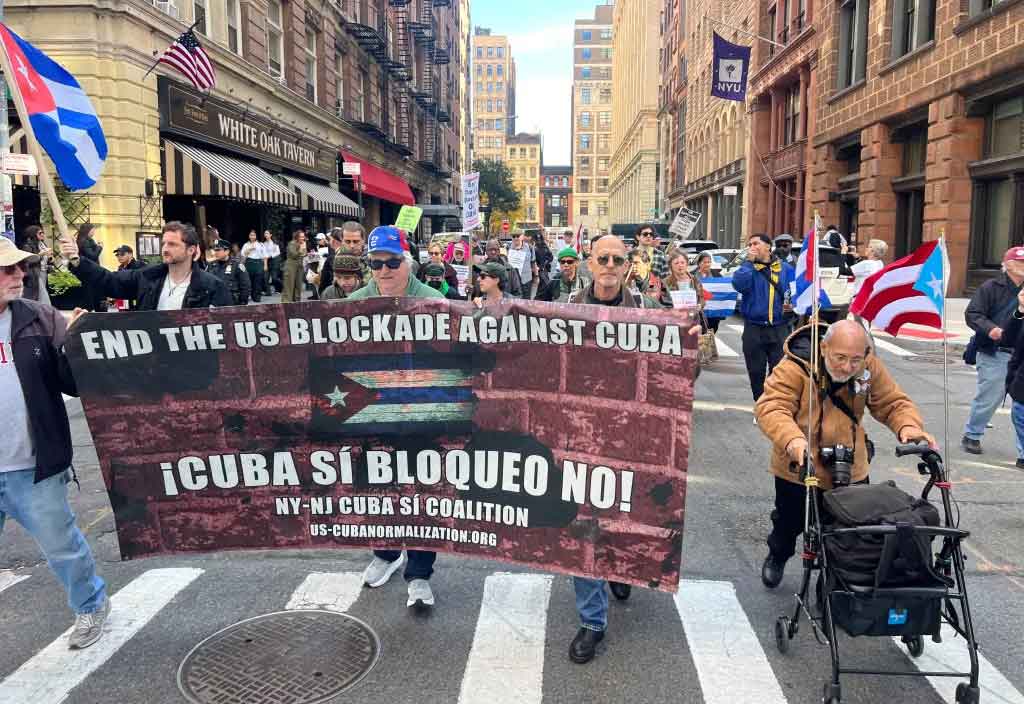
At the 30th Ibero‑American Summit held in Madrid, Spain, from November 4 to 5, 2026, Cuban officials issued a strong rebuke of the United States for its intensified sanctions against the island nation.
President Miguel Diaz‑Canel, posting on social media, relayed the message delivered by Foreign Minister Bruno Rodriguez at the summit. Rodriguez warned that the United States had “pushed its obsessive war of economic strangulation against Cuba to inhumane levels of collective punishment,” and described the sanctions as a form of energy blockade.
He said that over the past ten months Cubans had endured an unprecedented tightening of the U.S. trade embargo, an energy blockade akin to a naval blockade, and secondary sanctions aimed at individuals and companies that sought to do business with the island.
Rodriguez underscored Cuba’s commitment to Ibero‑American cooperation, calling for joint projects, knowledge sharing, and common solutions to promote sustainable development. The foreign minister emphasized that Cuba’s actions align with the principles of equality, sovereignty, and mutual respect that form the basis of the Ibero‑American Community.
“The United States has pushed its obsessive war of economic strangulation against Cuba to inhumane levels of collective punishment,” the minister said, urging action “in line with the founding principles of the Ibero‑American Community” to counter what he called arbitrary sanctions and abuse of power.
The statement came amid growing tensions between the island and the United States, which continues to enforce a comprehensive trade embargo that has broadened its scope in recent years. The U.S. has added new restrictions targeting individuals and organizations that facilitate trade with Cuba, further limiting the island’s economic options.
Locally, the Cuban government has highlighted the economic setbacks this has caused, citing challenges for businesses that have faced penalties for seeking U.S. market access. The energy blockade, described by Rodriguez, is seen as a particular source of concern for Cuba’s energy infrastructure and supply chains.
Cuba’s call for collective action at the summit reflects a broader stance to rally Latin American and Caribbean states against U.S. sanctions. The Ibero‑American Summit, with leaders from across the region, aims to strengthen regional cooperation on a range of issues, including trade, environmental policies, and economic integration.
Although the summit’s agenda covered a variety of topics, the Cuban delegation positioned the sanctions debate at the forefront of its message to the international community. The remarks were delivered with urgency, underscoring the country’s perception that U.S. policies are imposing “infinite levels” of pressure on its populace and economy.
President Diaz‑Canel’s tweet echoed the foreign minister’s insistence that the international community should support Cuba’s defensive stance. The tweet noted the importance of solidarity in confronting unjust economic measures and encouraged other states to stand in opposition to what they consider a violation of sovereignty.
In the days following the summit, the Cuban government issued a statement reaffirming the nation’s commitment to seeking a resolution that upholds national sovereignty and mutual dignity across Ibero‑American relations. The statement also called for renewed efforts to deepen economic cooperation among member states.
Meanwhile, U.S. officials did not issue a direct response to Rodriguez’s remarks, and the broader diplomatic dialogue remains influenced by ongoing concerns over trade restrictions and secondary sanctions. The escalating focus on sanctions at the summit signals that Cuba’s diplomatic efforts continue to seek support from its regional allies in curbing U.S. economic pressure.