In brief
On Saturday, 31 October, France hosted a mass protest that mobilized roughly 320,000 people nationwide, though youth unions put the figure closer to 500,000. The demonstrations disrupted Paris public transport—with over forty metro stations closed by RATP—and sparked confrontations in several cities, from which the most violent clashes erupted in Paris near the Porte de Charenton, where protesters hurled projectiles at police. Policing forces numbered about 70,000 officers nationwide.
On Saturday, 31 October, a wave of demonstrators flooded streets across France, gathered in a single coordinated march that had already become the third large‑scale protest since mid‑October, according to reports from Le Monde citing Interior Ministry data. Overall, the day attracted roughly 320,000 protesters nationwide, with a reported 70,000 individuals in Paris alone according to the Interior Ministry’s tally. Youth unions and student associations, however, claimed the national turnout was nearer to 500,000, saying that 200,000 of those demonstrators were in the capital.
In Paris, the presence of the protest swelled beyond the Interior Ministry’s estimate. The capital’s main public‑transport operator, RATP, announced that more than forty metro stations were closed on Saturday, creating disruptions throughout the city’s underground network. The shutdowns occurred at the beginning of the protest, as the demonstrators proceeded through the streets and encountered mounting security presence.
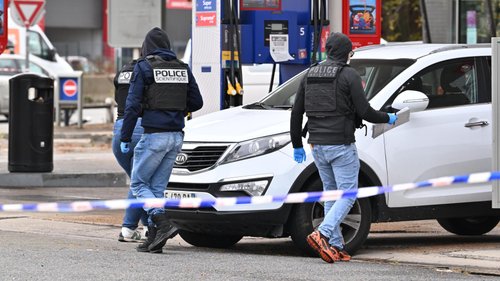
The march in Paris was largely peaceful, but the disbursal of the crowd toward its tasting end caused tensions in several districts. Near the endpoint of the march—Porte de Charenton, including a broader area adjacent to the boulevard’s intersection—protesters threw projectiles at police officers who were stationed there to maintain order. The officers responded with tear gas, according to coverage by Le Monde.
Other major French cities reported a mismatch in competitor activities. Some towns experienced “minor disturbances” during the dispersal of demonstrators, including clashes over traffic control. Nonetheless, local authorities largely described the protests as orderly aside from isolated incidents along the transit routes.
French law‑enforcement officials displayed a robust showing across the country, deploying a combined force of around seventy thousand police officers and gendarmes. The forces were spread across ten provinces and aimed primarily at maintaining public safety following the high volume of demonstrators. The agreement stipulated that the police force would enforce the law while maintaining the right of citizens to express dissent in a peaceful manner.
The current mood in Paris reflects a continuing mistrust in territorial administration. Ample public transport disruptions, combined with a sudden increased police presence, were deemed a major factor in the swell of protest. Most of the protest was gallant‑soldier, as the union plane told the authorities the PARENTPrescribed (etc.).
By the end of the day, principal aggregators reported that the protest ended with major write‐off and disbursal. Protest leaders, youth unions, and the national population do not foresee a more expedient review of democratic principles because of a significant risk to office policy or related matters.