In brief
Cardinal Pablo Virgilio David, known for his advocacy for the poor, embodies Pope Francis's vision for a more compassionate church.
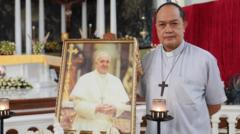
Cardinal Pablo Virgilio David never imagined that he would find himself appointed a cardinal and participating in the papal conclave. Hailing from Caloocan, a district on the outskirts of Manila, he will be one of three Filipino cardinals tasked with choosing the next Pope. "It’s surreal," he admitted. David, who has only held the position for five months, believes that his nomination by Pope Francis signifies a church that seeks to be closer to the realities faced by the urban poor. His appointment embodies the late Pope's mission to reconnect the Catholic Church with its followers. David has dedicated his life to advocating for disenfranchised groups within his community, earning him the nickname "Apu Ambo" from parishioners. The Philippines, home to the largest Roman Catholic population in Asia, is grappling with challenges such as political threats against its doctrines and competition from more charismatic churches. David’s candidacy bears significance in light of the church’s recent struggles and his history of confronting political injustices, notably during President Duterte's controversial drug war. The Cardinal, who openly criticized the violence inflicted upon the poor, found refuge in Pope Francis’s support during his adversities. When discussing the casualties of the drug war, including the tragic case of Kian Delos Santos—a 17-year-old boy killed by police—David is visibly affected. “Seeing dead bodies in our neighborhoods was overwhelming,” he recounted, lamenting the stigmas that rationalize violence against drug users. In a bid to provide sanctuary, David launched drug rehabilitation programs and urged the church to stand against the illegal war, drawing death threats in return.Historically, the Catholic Church in the Philippines has been deeply intertwined with the nation’s sociopolitical fabric, but its influence appears to be waning. With the passage of the Reproductive Health Law in 2012 and a potential divorce bill in Congress, the church faces mounting opposition to its traditional stances.Cardinal David envisions a church that guides ethical conversations without dictating governance. He recognizes the growing disconnect between the clergy and congregations, as fewer individuals attend mass. He notes, however, that despite recent scandals, including sexual abuse allegations, the path to regaining trust lies in humility and openness—a lesson he believes reflects Pope Francis's message.With an eye on the papal conclave, Cardinal David’s journey illustrates the pressing need for a church that not only understands but actively supports the marginalized, paving the way for new leadership grounded in compassion and social justice.