In brief
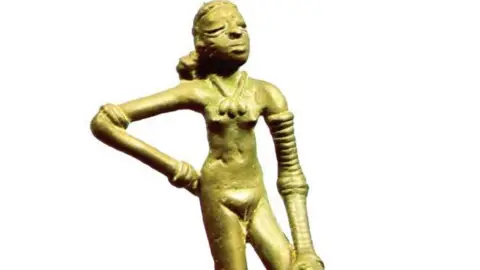
The National Council of Educational Research and Training (NCERT) recently removed a dark‑shaded version of the ancient ‘Dancing Girl’ figurine from a Grade‑9 textbook after historians and educators demanded the unaltered image. The sculpture, discovered at Mohenjo‑daro and now housed in the National Museum, Delhi, dates back to 2600 BCE and has long been a symbol of the Indus Valley civilisation. NCERT’s director confirmed the original photograph will be restored in digital editions and future print copies. The episode highlights growing concerns over how cultural heritage is presented in school curricula and the pressure to balance modesty norms with historical accuracy.
The torso of the famous bronze sculpture was obscured in a new Grade‑9 NCERT book, sparking a swift response from historians and educators.
The “Dancing Girl” was unearthed at Mohenjo‑daro in 1923 and dates back to the Indus Valley civilisation around 2600 BCE. The figure, now in the National Museum, Delhi, depicts a young woman in bronze with a confident stance.
In the latest edition, a dark shading was added over the torso in an attempt to “sanitize” the image, a move that many saw as an unnecessary censorship of an ancient artefact.
After the breach of public trust, leading scholars protested and critics demanded the figure be shown unaltered. The National Council of Educational Research and Training (NCERT) – the body that drafts textbooks for CBSE – announced the image would be removed.
In response, NCERT director Dinesh Saklani said the original photograph is being restored in the digital version and future print copies will use the unedited image. “We will replace the image after consultation with experts,” he confirmed to ANI.
The incident comes at a time of debate over NCERT’s new Arts Education Series under the National Education Policy. While the series aims to integrate arts and culture, the debate shows that students and educators expect academic materials to reflect cultural heritage accurately.
Both contemporary educators and archaeologists argue the “Dancing Girl” is a symbol of artistic confidence, not a depiction of modesty. An editorial in the Indian Express warned against limiting agency in Indian history learning.
For more details, see the original BBC report: NCERT textbooks: Why some Indian scholars are disowning books they wrote.