
In brief
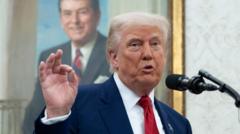
In a significant decision, the US Court of International Trade voided President Donald Trump’s extensive tariffs, arguing that the emergency powers he invoked do not grant him the unilateral authority to impose these import measures on international trade. The court emphasized that the Constitution allocates exclusive authority over trade regulation to Congress, refuting the administration's interpretation of the International Emergency Economic Powers Act (IEEPA) of 1977, which Trump cited as justification for the tariffs.
The lawsuit, brought forth by the Liberty Justice Center on behalf of a coalition of small businesses adversely affected by the duties, marked a substantial legal challenge to Trump's "Liberation Day" tariffs. The court's ruling specifically abolished tariffs targeting nations based on immigration and drug concerns and excluded discussions on tariffs related to certain goods like cars and metals, attributed to a different legal framework.Reactions to the ruling have been divided. The White House condemned the decision, asserting that it disrupts the ability to address national emergencies effectively. "President Trump will utilize every possible measure to ensure American interests are prioritized," said deputy press secretary Kush Desai. In contrast, New York Attorney General Letitia James applauded the ruling as a reaffirmation of constitutional limits on presidential power.Global financial markets reacted favorably to the news, witnessing increases in Asian stocks and surges in US stock futures. The forthcoming steps involve the White House initiating an appeal within ten days, with potential implications for businesses that were previously burdened with tariffs. Should the appeal fail, refunds with interest may be issued to businesses that paid the tariffs, while maintenance of the current tariff regime would persist until further judicial evaluations are completed.Market analysts noted that the ruling represents a potential shift in trade policy from an authoritarian approach to one that respects institutional boundaries. The decision underscores a judicial commitment to uphold the rule of law against executive overreach, potentially paving the way for a more stable economic landscape moving forward.The backdrop to this ruling dates back to April, when Trump unveiled an aggressive tariff strategy affecting trade relations with multiple nations. His administration's fluctuating policies have induced instability in international markets, although recent agreements, including those with China and the UK, suggested a move towards more cooperative trade conditions. As the legal consequences of the court's ruling unfold, the future of US trade policy remains to be seen.

