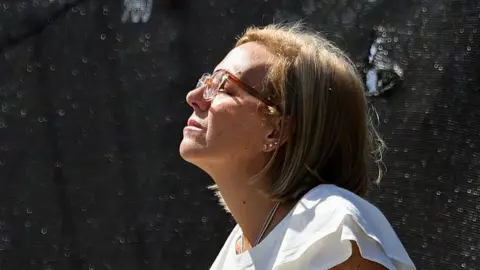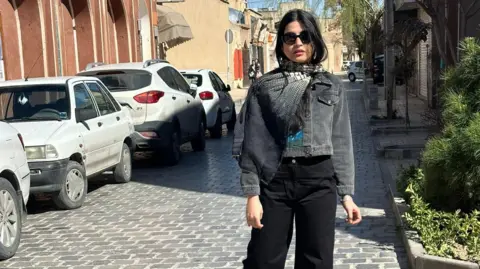
An Iranian woman who witnessed the bloody crackdown on protests in Iran has described how her neighbourhood turned into a 'war zone' as security forces opened fire at crowds with live ammunition.
A government-imposed internet blackout in Iran, now in its third week, has prevented many accounts of what has happened from reaching the wider world.
But some Iranians who have left the country have been able to share what they have seen.
Parnia, who lives in London, told the BBC that she was visiting her family in the central city of Isfahan when the protests broke out in the capital, Tehran. They quickly spread across the country, and within days there were hundreds of protesters in the Hakim Nezami and Khaghani neighbourhoods of Isfahan.
'There were women and men from seven to 70 years old,' she said. 'On just one street there were 200 to 300 people. People were chanting 'Death to the dictator' and 'Long live the shah.'
The 'dictator' was Iran's Supreme Leader Ayatollah Ali Khamenei, and the shah a reference to Iran's late last monarch, overthrown in the 1979 Islamic revolution, and his son, the exiled Crown Prince Reza Pahlavi.
Isfahan has seen protests and crackdowns down the years. But Parnia said she had never seen anything like what happened during the recent unrest, which was sparked by anger over the collapse of the Iranian currency.
First, security forces fired tear gas at the protesters, she said. Then they formed a line and fired birdshot.
'I saw people getting shot and falling down, and I saw blood on the street.'
Parnia said she ran away down alleyways and was suddenly pulled into an apartment block by a woman. Inside, she said, were many injured protesters.
'I saw the lobby floor covered in blood, and I saw a girl whose leg was full of pellets.'
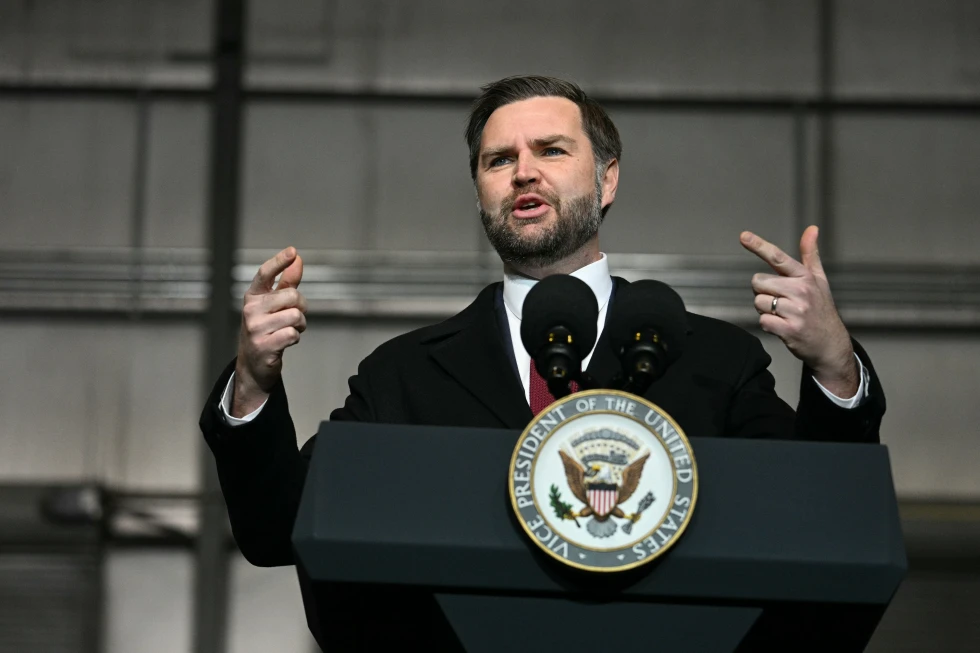
On Friday morning, 9 January, Khamenei said Iran would not back down from dealing with what he called 'destructive elements', a day after US President Donald Trump had threatened to hit Iran 'very hard' if authorities started killing people.
Despite the risks, Parnia went out to protest again on Friday evening.
'The protesters were hopeful,' she said. 'You could see fear on everyone's faces. We were afraid to pass in front of the security forces and come closer together,' she said.
'We thought even if we get killed, it would be a reason for Trump to act faster.'
Parnia left Isfahan that same day and traveled to the capital, Tehran, to catch a flight back to London.
Since her return to the UK, Parnia has been in touch with her friends in Isfahan, learning about the staggering toll on protesters, some of whom have suffered life-altering injuries.
Many believe the true figures of casualties may be even higher than 4,600 deaths reported by human rights groups.
Parnia expressed determination to join Iranian opposition protests in the UK, voicing a fierce commitment to be a voice for those silenced by the regime.