In brief
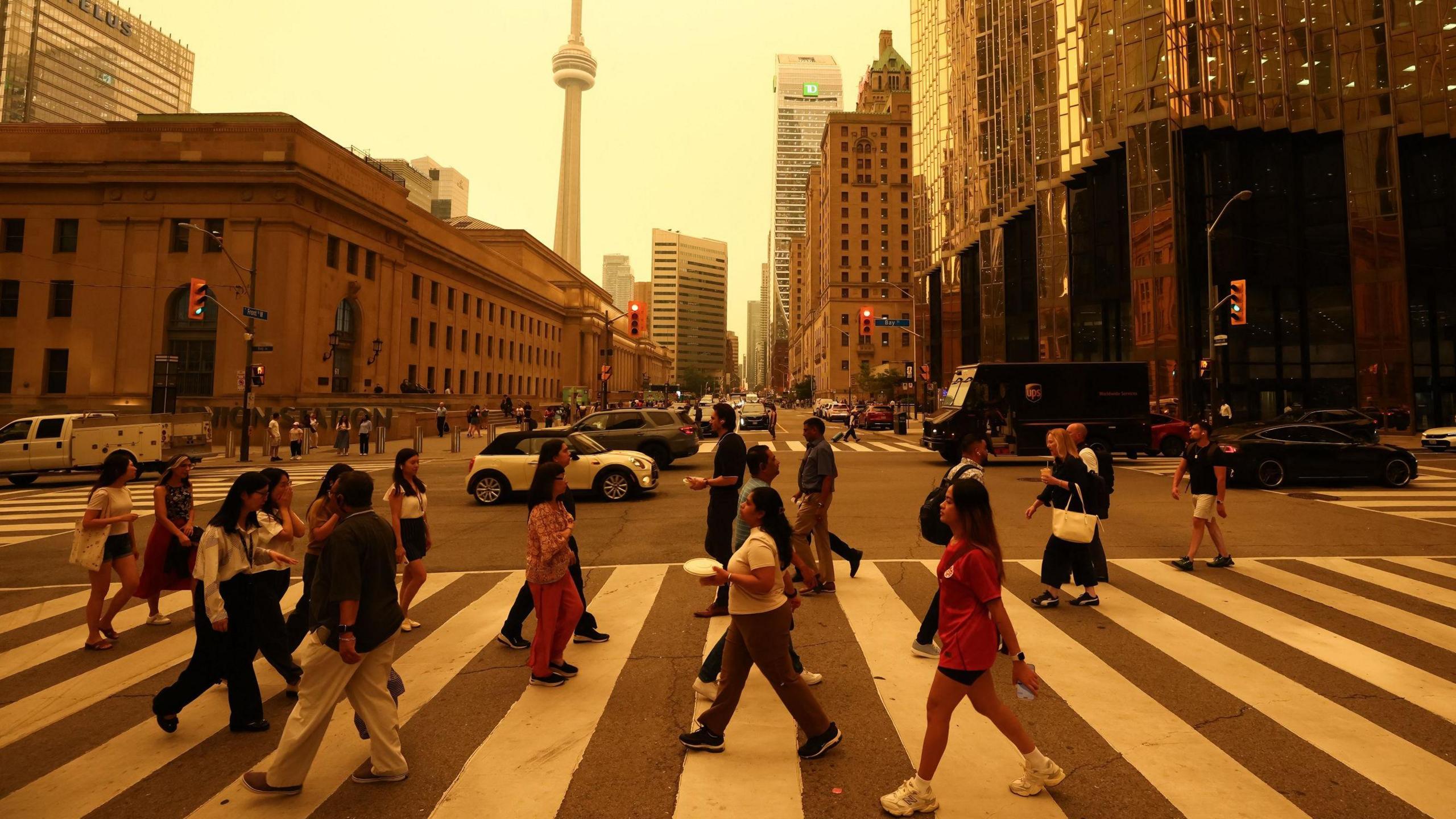
A pulse of fire across Canada's boreal forest and the northern United States is pouring thick smoke into major cities, shrouding skylines from Toronto to Washington, D.C. The smoke contains hazardous PM2.5 and nitrogen dioxide, prompting health warnings and mask distribution. Politically, the blaze‑induced haze has sparked a stand‑off between Canadian and U.S. leaders, with U.S. President Donald Trump threatening tariffs for Canada’s perceived inaction. Climate experts say rising temperatures and drier conditions fuel these ignitions, but it is a trans‑border meteorological phenomenon that can’t be stopped by borders alone.
Hundreds of active wildfires across Canada’s vast northern forests are sending choking plumes of smoke into the air over the United States, shrouding major metropolitan skylines from Toronto to Washington, D.C. The Canadian Interagency Forest Fire Centre reports 888 blazes are burning, nearly 200 of those in Ontario, where some fires have already forced evacuations and left First Nation communities completely levelled.
The smoke is a cocktail of PM2.5 and nitrogen dioxide, small particles that can infiltrate the deepest parts of human lungs and trigger respiratory, cardiovascular and eye irritation. Because of the severity of the haze, cities such as Detroit, Chicago, New York, Minneapolis and Washington, D.C. have been catalogued worldwide as having some of the worst air quality in the world this week, prompting municipal officials to declare “orange alerts” that advise residents to avoid outdoor exercise, stay indoors, wear N95 masks and seek medical care for breathing symptoms.
Satellite imagery shows the fire‑produced plume travelling south‑east from Ontario across the Great Lakes and the Mid‑Atlantic, eventually dipping to Virginia and the Carolinas by Friday as wind patterns change. Local authorities have distributed protective masks, while routine air‑quality monitoring stations in Toronto have shown levels of PM2.5 above 100 µg m‑³ at times.
The cross‑border smothering has not only impacted public health but also invoked a diplomatic spat. President Trump threatened new tariffs on Canada, citing the country’s “willful negligence” in stopping the wildfire threat. Canadian Prime Minister Mark Carney was called to respond by U.S. lawmakers, while Ontario Premier Doug Ford countered by demanding concrete action and accusing the United States of “inputting flak” on Canadian forest management, which is largely provincial. Experts note that weather does not recognise borders; smoke from any major blaze can drift into either country, making a bi‑national effort essential.
U.S. Climate experts say the current outbreak is a runoff of longer‑term temperature and drought trends. The summer of 2025 saw 8.3 million hectares burned across Canada, a figure that seasonally dwarfs the 15 million hectares of 2023 fires. Climate change is amplifying heat waves, drying soil and vegetation that feeds the blazes, so the risk remains above normal for the rest of July and into August in the Canadian Oak Ridge where new fires are predicted to ignite.
For those living in the affected zones, health officials urge:
- avoid strenuous outdoor activity
- stay Indoors, close windows and seals
- wear a certified N95/KN95 mask
- monitor symptoms of wheezing, breathlessness and chest pain and seek medical help if they appear
Multiple city councils have activated emergency air‑quality protocols and are offering free masks at community centres, and the WHO warns that chronic exposure to such smoke can worsen long‑term respiratory and cardiovascular disease outcomes. In Canada, local health advisories link to the Environment Canada Air Quality Health Index page for real‑time updates, while the U.S. Met Office provides a similar resource for the states along the smoke corridor.
As the World Cup final approaches, organisers of the New York‐New Jersey match have issued emergency alerts and free masks to players and fans, but early rain is expected to clear the skies before the showdown between Spain and Argentina at MetLife Stadium.