In brief
Ukrainian drones have struck several Wildberries logistics hubs across Russia, destroying warehouses and killing dozens of workers. Cited as part of Kyiv’s strategy to disrupt Russia’s military logistics, the attacks also hit independent retailers who depend on the platform for survival. A single seller reported losing 1.4 million roubles in inventory and warned that further strikes could bankrupt them. With the Russian economy already burdened by rising VAT, internet shutdowns, and a fuel crisis, the Wildberries attacks add a new nail to an already fraying economic backbone.
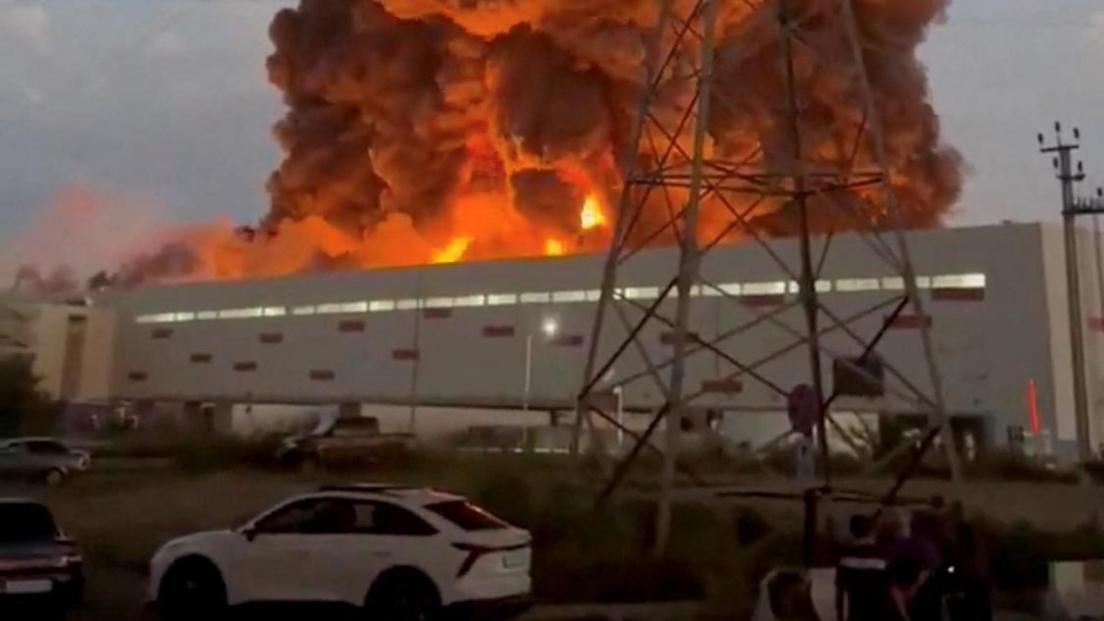
Ukrainian drones have struck several Wildberries logistics hubs across Russia, destroying warehouses and killing dozens of workers. The first blows hit sites in Elektrostal near Moscow and Kotovsk in the Tambov region, where seven night‑shift workers were killed and more than 750 million pounds of goods were destroyed.
Since the full‑scale invasion began, Kyiv has targeted facilities it says supply weapons to the Russian army. The latest strikes – in Krasnodar, Nevinnomyssk and other hubs – were announced by the Russian side as attacks on “major logistics facilities” used for drone‑production components.
For independent sellers the damage has been brutal. One stationery trader, who relies solely on Wildberries, lost all her stock when the Elektrostal warehouse went up in flames after she had just delivered goods. She now faces empty shelves as the back‑to‑school rush approaches. Another apparel seller reported a loss of 1.4 million roubles and suspended new orders for weeks.
Wildberries, Russia’s biggest online marketplace, operates as a platform that stores, orders, ships, and processes payments for other sellers. Damage to its warehouses therefore spreads to thousands of small and medium‑sized enterprises that depend on the network for their livelihood.
Owner Tatiana Kim has pledged not to abandon the sellers, offering temporary discounts and waiving shipping fees, but a clause added to contracts earlier this month puts drone attacks under “force majeure”, absolving the company from liability.
The attacks come amid a host of other pressures on Russia’s business community. VAT rose from 20% to 22% in January, subsidies were scrapped, and internet shutdowns cost businesses huge sums. A fuel crisis triggered by Ukrainian strikes on oil depots has left Russia without enough gasoline, deepening economic strain.
According to Kontur.Fokus, 209,000 small and medium‑sized companies shut down in the first quarter of 2026 – a 9% rise over the same period in 2025. Prof Ruben Eniklopov of Pompeu Fabra University remarked that each new attack is “another nail in the coffin” for an already fragile economy.
While Russian retail giants such as Wildberries and Ozon play a vital role in the country’s trade, the recent attacks demonstrate how war can ripple through the supply chain, hurting the very businesses it was promised to protect.