In brief
The Ankara NATO summit featured the U.S. president, in a scene that highlighted his longstanding criticism of the alliance. He visited the airport on the same day the Turkish president welcomed him personally, while the two walked arm‑in‑arm with a band and a flypast to signal friendship. Trump punctuated the gathering with remarks about Greenland and the U.S.'s role in Arctic affairs, sparking backlash from other alliance members. Meanwhile, European leaders and the Ukrainian president addressed the urgent need for air‑defence systems to counter Russia’s missile threat, underscoring shared concerns over a potential rapid rearmament.
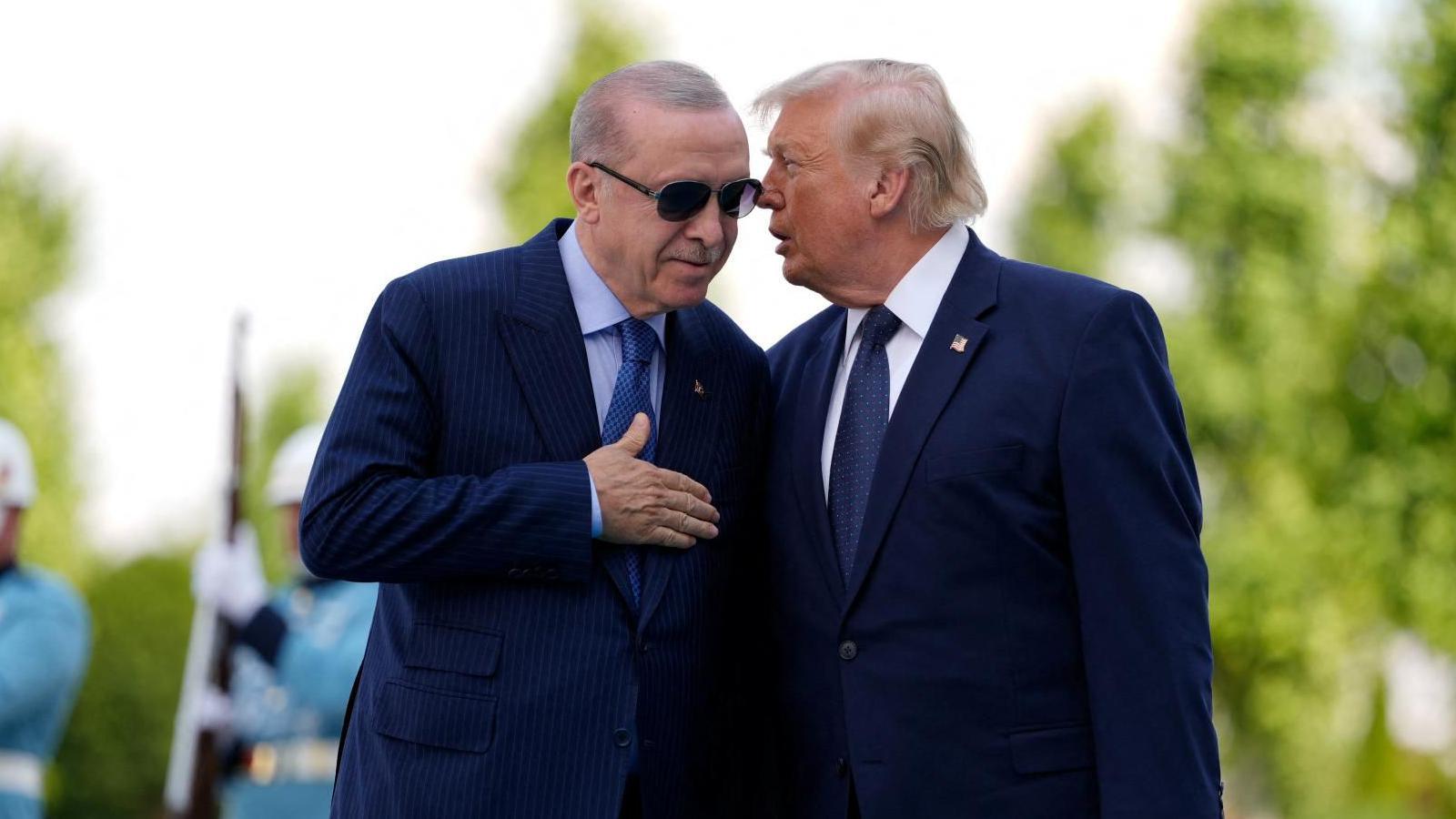
The June 2026 NATO summit in Ankara saw the United States president arrive in a show setting that mirrored a red carpet more than a treaty meeting. Turkish President Recep Tayyip Erdogan personally greeted him at the airport, and the two walked arm‑in‑arm while a band performed the Stars and Stripes, accompanied by a Turkish air‑force flypast that trailed red, white and blue smoke.
The president’s arrival raised the possibility of a political disruption and, as it turned out, he indeed delivered remarks that broke the customary unity of the alliance. He suggested that the United States should take over Greenland, a piece of Danish territory, in a line that drew rapid criticism from Denmark’s prime minister, who warned that a forced takeover would threaten the alliance’s cohesion.
Trump also lamely criticized British support after the UK allowed U.S. airstrikes against Iranian missile sites from its bases. He declared that he would test his allies’ commitment to U.S. interests, a post where the UK’s Defense Investment Plan seemed short of the resources set out in last year’s Strategic Defence Review.
Beyond the politics, the summit carried a serious agenda for rearming Europe. NATO delegates signed new contracts for Airbus to produce a fleet of transport aircraft and agreed on Sweden’s GlobeEye planes as replacements for the aging AWACS platforms.
A key part of the discussion involved air‑defence, spurred by Ukrainian President Volodymyr Zelenskiy who highlighted the urgent need for anti‑ballistic missile systems. He urged partners to deliver affordable, mass‑produced interceptors sooner than 2030, stressing that a gap now could be exploited by Russia if the conflict in Ukraine ends before European forces are adequately protected.
Concluding the summit, European leaders welcome the opportunity to strengthen defence cooperation while warning that the window for the shift in balance of power may close quickly. The presence of the former president has underscored the tension within NATO: balancing leadership expectations against collective defence commitments in an era of rapid technological and geopolitical change.