In brief
During last week’s deadly flash floods along the Trishuli River, workers on a hydropower site were trapped as water suddenly rushed into a tunnel, crushing the concrete lining and forcing a frantic escape. Pemba Dundu Tamang, a labourer on the Upper Trishuli 3B project, described the fury of wind and water that chased him as he fled for 20 minutes uphill. The disaster cost the lives of over 6,000 Nepalis, with more than 4,000 still missing—many of whom were hard‑hat workers at turbines and tunnels. Rescue forces are now pumping air into the wrecked tunnels and clearing rubble with excavators in a desperate bid to reach survivors. While Tamang and his colleagues survive, they face uncertain futures in a country where hydropower supplies 99 % of electricity, and concerns grow that widespread floods may undermine these critical projects.
River Water Smashed Into Tunnel and Chased Me for 20 Minutes, Nepal Worker Tells BBC
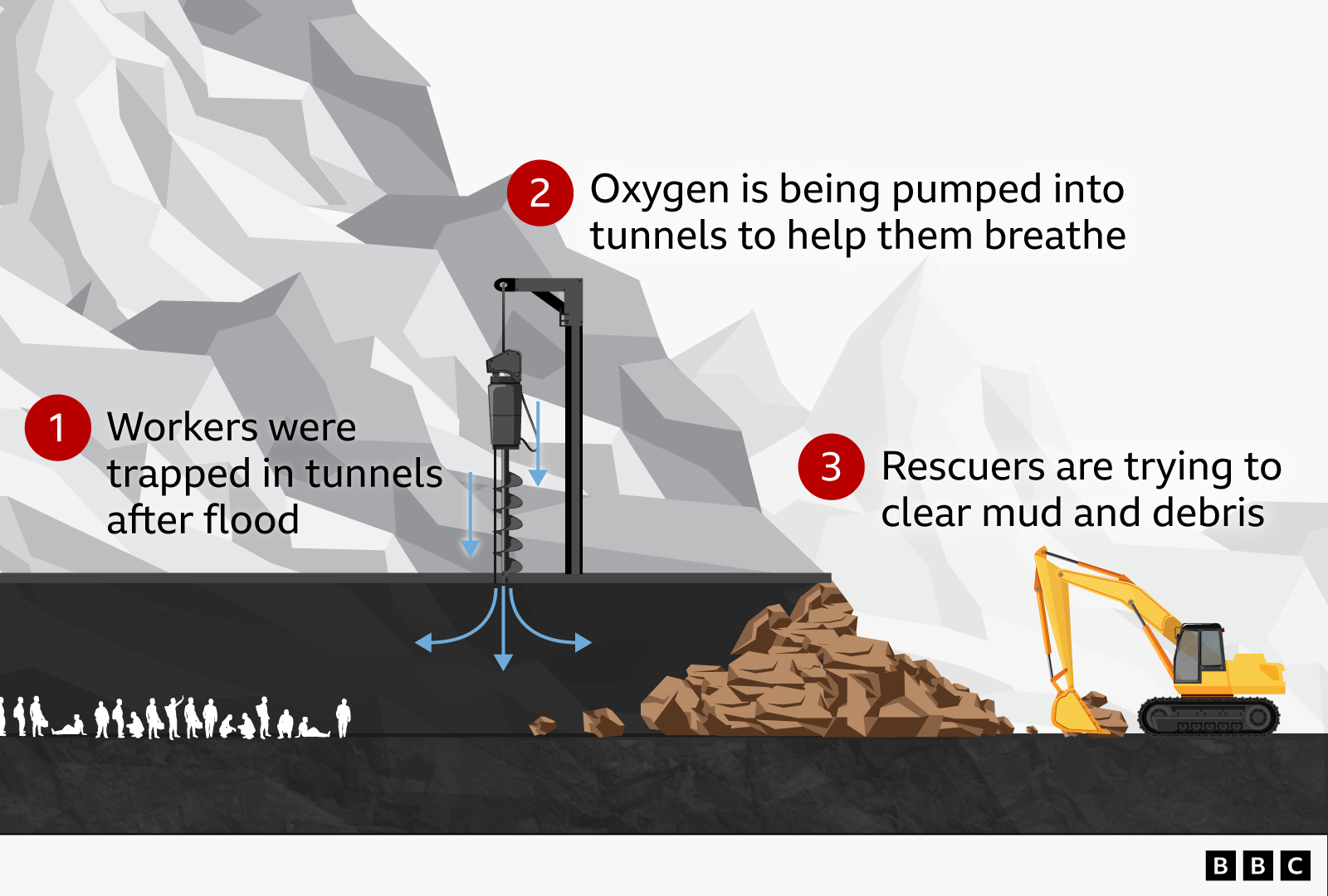
In the week before the 1,000 death toll surpassed in Nepal’s flash flood‑devastated region, a group of around 30 hydropower workers were struck by a sudden and violent surge of water that rushed into a concrete tunnel they were building.
“It started with a sudden, strong gust of air that blew plywood across the field and knocked heavy machinery over. That was when I knew the flood was coming,” says worker Pemba Dundu Tamang. He raced toward the tunnel entrance, only to find the water following him.
Those caught between the rolling wave and the tight tunnel walls were trapped, with some forced to release their metal cranes and dig for the only escape routes. Tamang escaped by scrambling uphill for roughly twenty minutes, but his family—his mother, sister‑in‑law, three children and two brothers—were swept away on the riverbank.
In a region where over 99 % of the electricity comes from hydropower, the Upper Trishuli 3B project was slated to contribute an additional 400 MW to the national grid. The sudden flood halted progress, leaving workers stranded and the pipeline of water disrupted.
Army spokesman Raja Ram Basnet stated that a total of 119 people had been rescued as of Tuesday. Rescue teams are currently pumping oxygen into the tunnels and clearing the dead‑muck with heavy machinery.
Reporters on the ground, including Reuters correspondent, have filmed the physical scale of the disaster and the relentless effort of rescue workers clearing the slab of broken concrete beneath the site.
Tamang has chronicled his ordeal and now faces an uncertain future, saying, “If these hydropower projects shut down, we will all suffer.” He made his life being a survivor a heavy burden amid a suffering community.
Experts have identified several warning signs of instability in the glacier and surrounding rock before the disaster, suggesting that an earlier alert system could have saved more lives. The avalanche’s speed hid the warning from those fighting for survival in the tunnels.
With heavy machines still working in night and day to reach survivors, the story of the flood is a stark reminder of the vulnerability of large infrastructure in the Himalayas, and the human cost of natural disasters.