A year ago, the war that President Bashar al-Assad seemed to have won was turned upside down.
A rebel force had broken out of Idlib, a Syrian province on the border with Turkey, and was storming towards Damascus. It was led by a man known as Abu Mohammed al-Jolani, and his militia group, Hayat Tahrir al-Sham (HTS). One year later, he is interim president, and Bashar al-Assad is in a gilded exile in Russia.
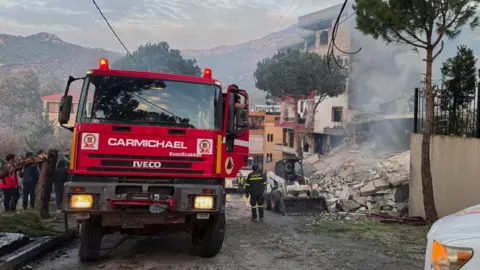
Syria is still in ruins. In every city and village I have visited this last 10 days, people were living in skeletal buildings gutted by war. But for all the new Syria's problems, it feels lighter without the crushing, cruel weight of the Assads.
Sharaa has found the going easier abroad than at home. He has won the argument with Saudi Arabia and the West that he is Syria's best chance of a stable future. In May, the Crown Prince of Saudi Arabia arranged a brief meeting between al-Sharaa and US President Donald Trump. Afterwards, Trump called him a young attractive tough guy.
At home, Syrians know his weaknesses and the problems Syria faces better than foreigners. Sharaa's writ does not run in the northeast, where the Kurds are in control, or parts of the south where Syrian Druze, another minority sect, want a separate state backed by their Israeli allies.
On the coast, Alawites – Assad's sect – fear a repeat of the massacres they suffered in March.
A year ago, the new masters of Damascus, like most of the armed rebels in Syria, were Sunni Islamists. Sharaa, their leader, had a long history fighting for al-Qaeda in Iraq and later broke with and fought both IS and al-Qaeda. People who had travelled to Idlib to see him said that he had developed a much more pragmatic set of beliefs, better suited to governing Syria, with its spectrum of religious sects. Nevertheless, many still hold reservations due to his jihadist past.
The past year saw a shift in power dynamics, with security forces working tirelessly to dismantle IS cells, although threats remain. In November, a significant milestone was the first visit by a Syrian president to the White House, signaling a warming presence in western alliances.
However, Syria remains a land of contradictions. With a lack of governmental authority across many regions and ongoing sectarian tensions, the future remains precarious. The country has no rebuilding fund, and many citizens live in fear, questioning how they will rebuild their lives amid uncertainty.
In the words of one Syrian mother, We go to sleep and wake up afraid—a poignant reflection of the ongoing struggles faced by those navigating a post-Assad landscape fraught with challenges.