In brief
Spanish intelligence services reported a surge in social media calls for migrants to cross into Ceuta on 29 July, a day before 72,000 people entered the city. The CNI highlighted WhatsApp and Facebook groups that advertised crossing opportunities. Prime Minister Pedro Sánchez maintained that the mass arrival was unforeseeable, a claim challenged by opposition parties citing the leaked documents. The crisis saw many migrants swim past a fence, with over a hundred fatalities and thousands left in temporary camps. The government insists it acted on available information while facing accusations of misinforming the public.
Spanish intelligence services warned of a planned mass migrant crossing into Ceuta the day before thousands of people entered the territory, newly released government documents show.
On 29 July, Spain’s National Intelligence Service informed Moroccan and Ceuta authorities that social media groups were encouraging migrants to cross the following day.
Prime Minister Pedro Sánchez has claimed that the events of 30 July were impossible to predict, but opposition parties allege that the government misled Spaniards.
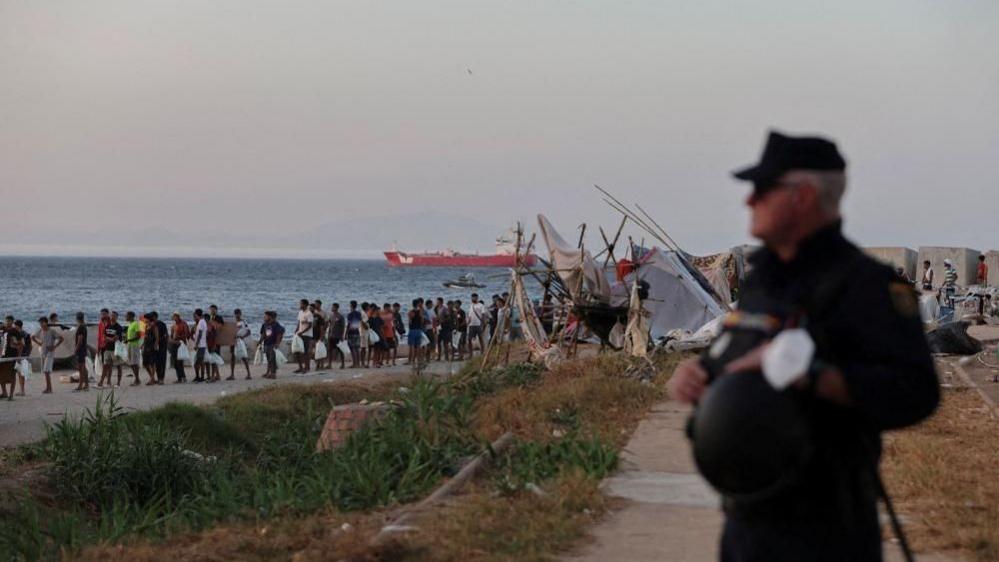
At least 72,000 migrants crossed from Morocco into Ceuta on 30 and 31 July, most swimming past a border fence. Local officials estimate that at least 100 people died during the crossing.
Following the surge, many migrants returned to Morocco, though as many as 5,000 remain in makeshift camps or sleeping on city streets and beaches, provoking unrest in Ceuta. Residents reported safety concerns and some destroyed shelters while blocking aid deliveries to the migrants.
In a note dated 29 July, the CNI reported that WhatsApp and Facebook groups were promoting the attempt to reach the Spanish exclave either by swimming or using the border fence, noting that around 180,000 people were receiving the messages.
The CNI also warned the central government in Ceuta and the civil guard via text message about the social media activity.
More than 40 security documents linked to the Ceuta crossing were declassified after mounting pressure on Sánchez over his handling of the crisis and allegations that Morocco had facilitated the crossings.
Earlier this month, a leaked Spanish police report seemed to implicate Moroccan police in the incident, although Sánchez maintains there is no evidence of Moroccan complicity.
Shortly before the documents were released, he told Spanish television that the mass arrival of migrants was not expected, a statement contradicted by the new material.
Opposition politicians argue that the government had the information and is responsible for the invasion and deaths, demanding accountability.
Foreign Minister José Manuel Albares said he had no awareness of any report that might have foreseen the scale of the event on July 30.
A government source said that the published documents showed the information available before the mass crossing did not enable anticipation of the crisis’s magnitude or allow enough preparation time for an adequate response.
Central government delegate Miguel Ángel Pérez Triano characterized the WhatsApp messages from July 29 as merely an exchange of information and not an alert or reporting mechanism.