In brief
After a wave of about 78,000 migrants crossed the sea into Ceuta last week, Spain has imposed temporary border controls on all air and sea travel from Italy. The measures, which began at midnight and will last for a month, are designed to prevent those migrants from using Italy as a transit route. Spain’s Prime Minister Pedro Sánchez and Italy’s Minister Giorgia Meloni have publicly clashed over the necessity and fairness of the checks, and the dispute has drawn attention from other EU members who are already adjusting their own Schengen rules.
The Spanish government has announced temporary border controls on all flights and ships coming from Italy, a decision that comes weeks after a mass influx of around 78,000 Moroccan migrants to the Spanish enclave of Ceuta.
Immediate Measures
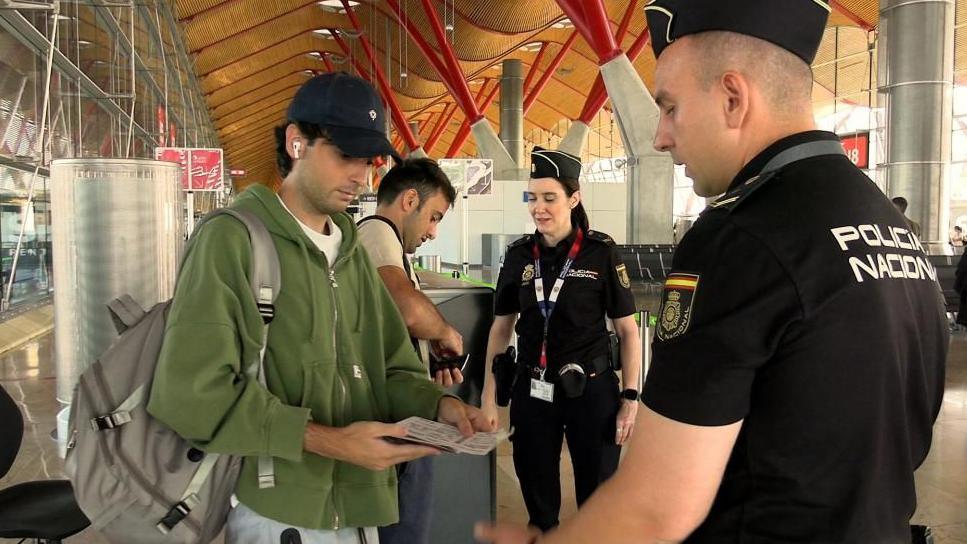
Starting at midnight (22:00 GMT) and lasting until 7 September, Spanish authorities will randomise checks on 5% to 10% of passengers travelling from Italy. The checks are intended to prevent migrants who crossed into Ceuta from using Italy as a transit point back into the EU.
Italian officials have also paused the free flow of passengers under the Schengen agreement, citing the need to keep migrants from Ceuta within Italy’s jurisdiction. Though Italy does not share a land border with Spain, it has applied uniform border checks to all incoming passengers, focusing on non‑EU residents.
Political Clash
The move has sparked a sharp back‑and‑forth between Spanish Socialist Prime Minister Pedro Sánchez and Italy’s conservative Minister Giorgia Meloni, who has advocated stricter EU migration rules for years. Spain dismisses Italy’s justification as “spurious arguments,” while Italy insists the checks will remain through at least 15 August, expecting a further migration wave to Ceuta.
Passengers have reported varied experiences. One woman from Madrid told RTVE that all passengers on her flight were required to present documents before disembarking. Another traveller noted that police approved of the identification check as he stood in line.
Broader Context
The temporary suspension of Schengen is not unprecedented; Italy already enforces controls with Slovenia, and Finland and Denmark have supported Italy’s stances. Meanwhile, the Czech Republic has called for Spain’s membership to be temporarily suspended.
While most migrants who arrived in Ceuta last week were returned within days, around 100 are believed to have died during the crossing, and some 1,400 minors remain in the enclave. Spanish officials do not anticipate a second wave, but Facebook posts have called for additional crossings, some offering swim gear for sale.
The plight of Ceuta, and the contested sovereignty between Spain and Morocco, has intensified the debate on migration management across the EU.
Read more: EU calls for stronger borders after Ceuta migrant crossings