In brief
Despite being the world's third-largest exporter of raw cashew nuts, Ghana's farmers are frustrated by low prices and missed opportunities for local processing. Entrepreneurs like Mildred Akotia are trying to change the narrative, emphasizing the need for better infrastructure and access to markets.
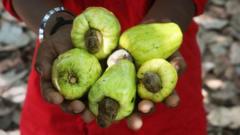
The Accra street vendor’s bemusement was palpable as I questioned the steep price of a 30g bag of roasted cashew nuts, equivalent to about 75 cents (60p). While affordable for a foreigner, this price marked a staggering 4,000% increase over the raw, unshelled cashews sold by local farmers. Ghana, the world's third-largest exporter of unprocessed cashews after Ivory Coast and Cambodia, faces a tricky dilemma in the cashew market.In the northern region, Nashiru Seydou's family farm grapples with difficult conditions, citing unreliable supply chains and fluctuating wholesale prices. Currently, he earns about $50 for a hefty 100kg sack of unshelled cashews. The gulf between the amount local farmers receive and what roasters charge for processed nuts is astonishing: while they sell for $500 a tonne to buyers, retailers mark them up to between $20,000 and $40,000 a tonne.With Ghana producing 180,000 tonnes of cashews yearly and exporting over 80% in their raw form, the country rakes in about $300 million in revenue, but misses out on the significantly larger profits from processed products. Mildred Akotia, CEO of Akwaaba Fine Foods, is one individual striving to boost local processing, albeit currently only managing 25 tonnes annually. She highlights the challenges posed by the high cost of credit in Ghana, explaining why local processing remains limited.The government's previous attempt in 2016 to ban exports of raw cashews to promote domestic processing floundered quickly due to backlash from the agricultural community. While current discussions around increasing tariffs and halting direct purchases from farmers are underway, industry experts argue that the core issue lies not just in policy but also in the local businesses' capacity to evolve.Economist and Nobel winner Prof. Daron Acemoglu stresses the importance of better access for processed Ghanaian cashews to international markets. Without a flourishing domestic market, which is hindered by red tape and infrastructural woes, accessing foreign markets becomes vital for sustainability.Akotia feels hopeful, aspiring to build her logistics operation to source directly from farms, as she receives international inquiries from places like the UAE and Canada. Ultimately, creating a consumer culture around cashew products in Ghana could spur a stronger local economy.