In brief
Pittsburgh's media scene has undergone dramatic changes this spring, marked by the salvation of the iconic Post-Gazette through acquisition by a nonprofit foundation, just weeks after the alternative Pittsburgh City Paper returned under new ownership. Experts believe this shift could transform local journalism in the city, despite challenges facing the industry over the past two decades, including declining interest and financial pressures. The transformation signifies a pivotal moment, offering a chance for community-focused reporting to thrive.
PITTSBURGH (AP) — In the space of a couple of weeks this spring, Pittsburgh media has lived through a near-death experience and a resurrection.
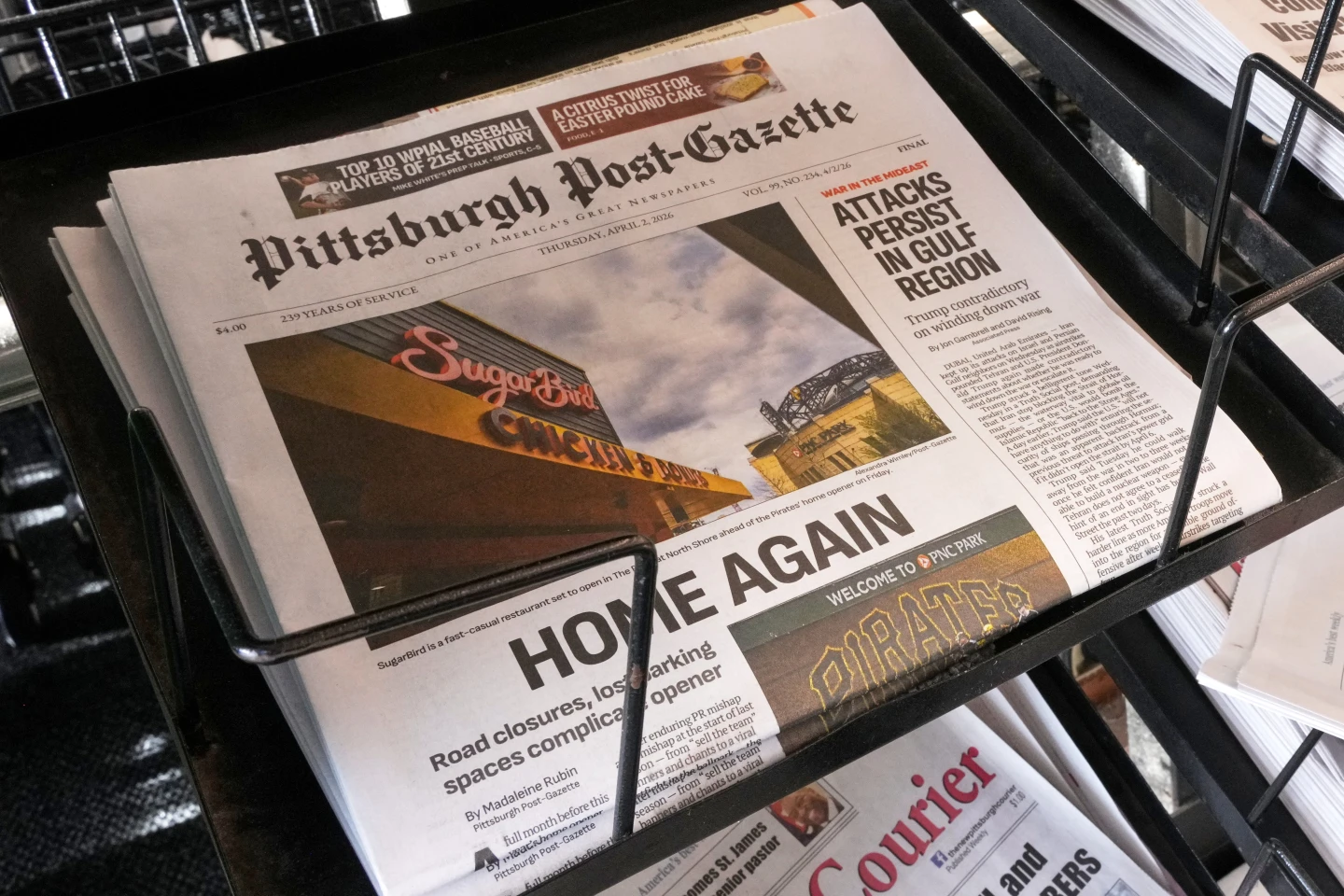
Owners of the Pittsburgh Post-Gazette last week announced the newspaper’s sale to a nonprofit foundation that said it was committed to keeping it open. A news outlet that predates the U.S. Constitution was due to close on May 3, which would have made the Steel City the nation’s largest community without a city-based paper.
Weeks earlier, the alternative Pittsburgh City Paper, which was set to close after 34 years, roared back to life under new ownership.
These recent developments are rare positive changes for a local news industry that has faced significant declines over the past two decades — newsrooms shuttered or thinned out, journalists laid off, and audiences drifting away. Experts suggest that the city's experience with the prospect of a news vacuum may galvanize efforts toward quality journalism.
“It’s human nature that sometimes you have to be shaken a bit to realize what’s important in your life,” said Halle Stockton, co-executive director and editor-in-chief of the digital news outlet Public Source.
The many incarnations of the Post-Gazette
The Pittsburgh Gazette was born on July 29, 1786, evolving through various names as the newspaper landscape transformed. Consolidations led to the establishment of the Post-Gazette, which has held its name for 99 years.
It gained a strong reputation, winning a Pulitzer Prize in 2019 for its coverage of the Tree of Life synagogue shooting. Recent challenges, including labor disputes, led to uncertainty about its future until the recent acquisition.
Experts in the media industry believe that the news scene in Pittsburgh is on the cusp of a significant transformation that could serve as a model for similar markets across the country.
Emerging Opportunities in Pittsburgh's Media Landscape
The Venetoulis Institute for Local Journalism recently acquired the Post-Gazette, a decision that many community members viewed positively, fearing a sale to a hedge fund instead. This acquisition may forge a path for future sustainability of local journalism.
Intent on revitalizing local news, both the Pittsburgh Tribune-Review and Public Source plan to expand their coverage to fill voids that may arise from the Post-Gazette's struggles. There's a strong sentiment that collaboration among local news organizations is vital for the survival of the industry.
Engaging the Next Generation with Local News
As the younger generation increasingly consumes news through social media platforms, local newspapers are challenged to adapt their outreach strategies. Conversations and town halls have opened avenues for residents to express their desires for effective local news coverage.
As students in local journalism classes express diminished interaction with traditional news sources, it underscores the importance of fresh approaches to engage audiences and deepen trust in journalism.
The dynamics of Pittsburgh's media landscape signify a pivotal moment that could reshape how local journalism is perceived and operationalized in the years to come.