In brief
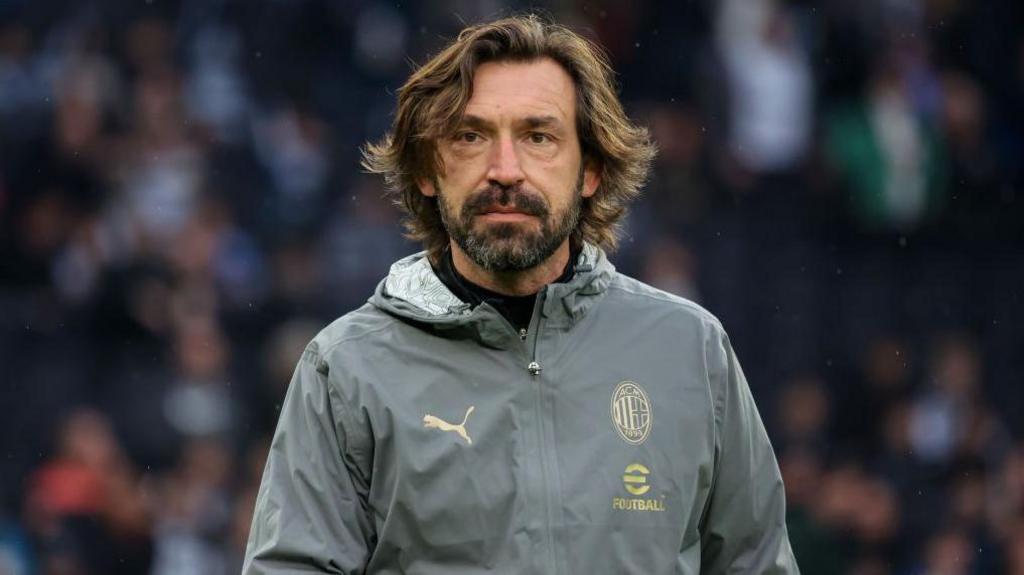
Andrea Pirlo announced that he is no longer a candidate to coach Italy’s national football team following sharp criticism from politicians, EU officials and football insiders of his recent appointment as global ambassador for Russian betting company Fonbet. The controversy erupted after revelations of Pirlo’s appearance at Fonbet-sponsored events featuring pro‑Kremlin figures. The decision coincides with the Italian Football Federation’s search for a new head coach after a tumultuous season. FIFA‑sitting figures such as the European Parliament vice‑president Pina Picierno voiced disapproval, while the Russian ambassador expressed disappointment at Pirlo’s rejection in his home country. The FIGC now faces pressure to choose a coach who can steer Italy away from world‑cup disappointment and navigate upcoming Nations League fixtures, with names like Antonio Conte, Roberto Mancini and others entering the running.
Andrea Pirlo has said he is no longer a candidate to coach the Italian national side following days of controversy over his ties to a Russian betting company.
His appointment as Italy’s next head coach had not yet been confirmed by the Italian Football Federation (FIGC) but was widely regarded as certain.
Over the weekend several Italian politicians criticised the FIGC’s choice, noting that Pirlo, 47, had taken a role as global ambassador for Russia’s Fonbet last October.
The betting company has sponsored sporting events involving veterans of Moscow’s war in Ukraine and hosted events in Russia where Pirlo appeared alongside pro‑Kremlin figures.
“Anyone who is or has been promoting Russia after 2022 should not hold national office,” said Carlo Calenda of the centrist Azione party.
In a Monday Instagram post, Pirlo acknowledged that “over the last few days I watched the debate that swirled around my name,” and clarified that his work with Dubai’s United FC was “exclusively commercial and sporting.”
Pina Picierno, a vice‑president of the European Parliament, described the choice of Pirlo as a step in the wrong direction for a football culture that desperately needs ethical reform.
The Russian ambassador in Rome, Aleksey Paramonov, offered support, lamenting that Pirlo “is now being ostracised” in his own country despite his contributions to world sport and Italy’s image abroad.
Scrutiny intensified last spring when Pirlo joined a Fonbet event in Moscow, photographing with former teammate Marco Materazzi at Luzhniki Stadium, alongside pro‑Kremlin pop star Shaman and Russian footballer Artem Dzyuba.
Ukrainian skeleton slider Vladyslav Heraskevych criticised Pirlo for standing next to Dzyuba, calling the event “sad” and a sign of “moral bankruptcy.”
The debate now risks engulfing FIGC technical director Paolo Maldini, who may resign after the controversy, as the role of head coach remains to be filled.
Maldini and his adviser Leonardo have been tasked with selecting a new coach to navigate Italy through a Nations League group featuring France, Belgium and Turkey, and aiming for Euro 2028 qualification.
After Italy’s failure to qualify for the World Cup and subsequent coaching changes, the Italian football community is engaged in soul‑searching; previous candidates like Pep Guardiola and Carlo Ancelotti were approached but ultimately not chosen.
Current names in consideration include Antonio Conte and Roberto Mancini, the former Euro 2020 hero who left Italy for Saudi Arabia after a failed World Cup qualification.