In brief
A Chinese media outlet launched an AI‑generated video that showed a monkey in Philippine clothing, surrounded by U.S. and Japanese flags, as a symbol of the Philippines’ supposed weakness in the South Sea dispute. Manila’s foreign and defence ministries called the image racist and propaganda and demanded that China retract the post. The clip, posted on China Daily’s Facebook, highlights the 2026 escalation of tensions between Manila and Beijing over the Spratly Islands and Scarborough Shoal. With the Permanent Court of Arbitration’s ruling in favor of the Philippines still unheeded, the incident fuels ongoing diplomatic friction. Officials warn that such mocking imagery only deepens mistrust and threatens regional stability.
Last week China Daily posted an AI‑generated clip showing a monkey wearing a Filipino shirt, pressed into a karaoke stage surrounded by U.S. and Japanese flags. The monkey was then forced to sing a song that was deemed “wrong” and to display a sheet titled ‘South China Sea arbitration award’ before being flung into the sea by water cannons.
In response, Manila’s foreign ministry labeled the portrayal as “dehumanising and racist” and “propaganda that exposes China’s moral bankruptcy.” The ministry demanded the clip be removed and warned that such imagery only widens distrust between the two nations.
The defence ministry echoed these accusations, calling the video contemptible and a clear sign of the Chinese Communist Party’s erratic behaviour. Defence Secretary Gilbert Teodoro said the clip is a “contemptible propaganda” that demonstrates political and moral bankruptcy.
The video remains posted on China Daily’s Facebook page at the time of reporting, and China has not yet issued a response to Manila’s rebuke.
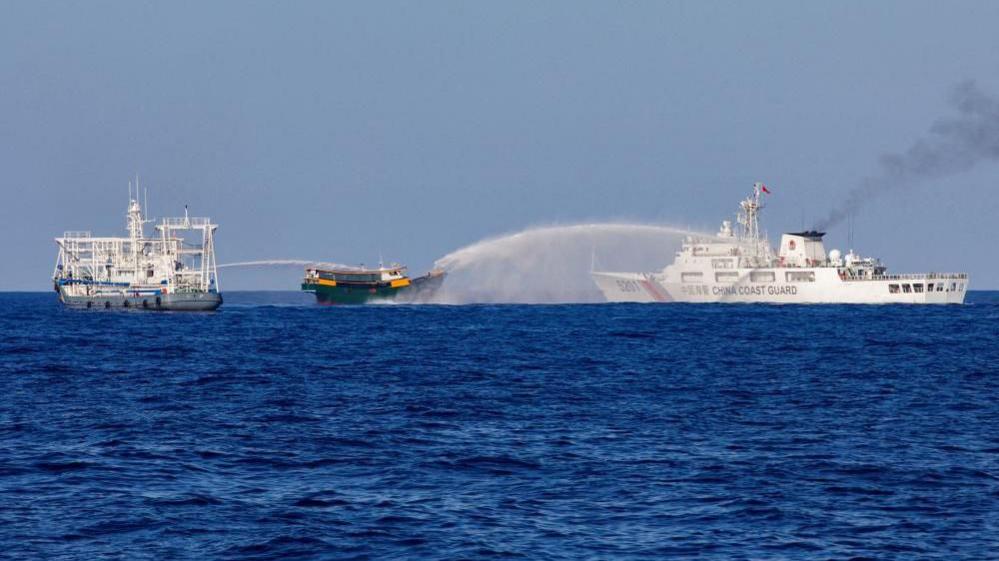
Tensions surface at the Spratly Islands and Scarborough Shoal—about 100 miles from the Philippines and 500 miles from China—where Chinese coast guard vessels routinely utilise high‑pressure water cannons against Philippine vessels, often causing damage and injuries.
Beijing’s latest actions, such as erecting a floating barrier at the Scarborough Shoal entrance in June, have been met with diplomatic protests from Manila. China refuses to recognise the 2023 Hague arbitration ruling that favored the Philippines on maritime claims.
The incident follows a broader trend of Chinese media mocking Philippine actions, with depictions of Manila as a clown, snake, and other demeaning symbols in recent social‑media posts.
The Philippines stresses that the South China Sea treaty’s intent is to promote peace, not to be used as a source of confrontation. The country’s stance remains firm that external forces and provocative behaviour only harm its sovereignty and regional cooperation.