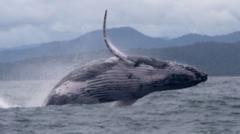
In a stunning display of nature's wonder, a humpback whale has embarked on one of the most remarkable migrations ever documented, potentially driven by the effects of climate change. Initially sighted off the Pacific coast of Colombia in 2017, this whale resurfaced near Zanzibar in the Indian Ocean several years later, covering a staggering distance of at least 13,000 km.
Research suggests that this incredible trek could be a result of climate change impacting the availability of food sources or perhaps an expansive search for a mate. Ekaterina Kalashnikova from the Tanzania Cetaceans Program remarked on the whale's journey as "truly impressive and unusual, even for such a migratory species."
Kalashnikova indicated that this could be among the longest distances ever recorded for a humpback whale, which typically inhabit all oceans worldwide. These marine mammals are known for their lengthy migrations yearly, transitioning from warm breeding grounds to nutrient-rich feeding grounds in cooler regions. However, this particular male's voyage featured two far-flung breeding locations.
One proposed explanation is that climate change may be affecting the population of krill, the primary food source for humpbacks, compelling them to venture farther afield in search of sustenance. On the other hand, some scientists believe that as whale populations grow due to global conservation efforts, these creatures may explore new breeding territories.
Dr. Kalashnikova noted that the reasons behind the whale's extraordinary journey remain speculative, encompassing global climate shifts, increased frequency of extreme environmental events, and species evolution.
The wandering whale was part of a group captured on camera by researchers off Colombia's Pacific coast in 2013. Its identification continued in 2017 and later in 2022 near Zanzibar. The measurements between the sightings indicate a minimum distance of 13,046 km, although the actual journey may be considerably longer.
This remarkable research is underpinned by a large repository of whale images collected from various contributors uploaded to happywhale.com, a citizen science platform. The site employs artificial intelligence to identify individual humpback whale flukes to track their global movements. The findings were published in the Royal Society Open Science journal, highlighting both a scientific triumph and a call to pay attention to the effects of climate on these magnificent creatures.