In brief
The Shenzhou 19 mission signifies a new generation in China's space program, as the crew embarks on a six-month stay in the Tiangong space station.
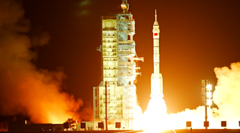
A Chinese spacecraft, Shenzhou 19, successfully launched with a three-person crew, including the nation's first female space engineer, Wang Haoze. The spacecraft docked at the Tiangong space station after a journey of over six hours, as part of China's efforts to solidify its role in global space exploration ahead of potential Moon missions by 2030. Beijing proclaimed the launch a "complete success," marking it as part of a record-setting year of 100 planned launches as China strives to surpass the United States in aerospace advancements.Witnesses at the launch site in the Gobi Desert described the event with vivid imagery: fire and smoke enveloped the rocket as it ascended, accompanied by the roar of engines and cheers from hundreds gathered to support the crew. In the Tiangong space station, the Shenzhou 19 team was welcomed by fellow astronauts from the recently launched Shenzhou 18.China’s President Xi Jinping had previously articulated the nation’s ambition to explore space, declaring such endeavors essential to China’s identity as a global power. However, U.S. officials have expressed concerns; NASA Chief Bill Nelson mentioned an impending race between the U.S. and China to navigate and potentially claim lunar territories.In the enthusiastic Dongfeng Space City, which supports the launch site, the space program is celebrated with visible national pride. Streets are adorned with flags, and children participate in joyous send-offs, showcasing the public's engagement in these historic missions.The Shenzhou 19 pilot, veteran Cai Xuzhe, leads the mission alongside young, inspired astronauts like Song Lingdong, who cite their motivations from earlier space missions. Pledging commitment to their mission, they represent a new era in China's space endeavors.China's achievements, including recent lunar and Mars exploration milestones, have sparked both admiration and apprehension worldwide. The nation has ambitious plans, including an extensive satellite constellation for internet coverage and subsequent lunar exploration.Chinese officials, however, insist their efforts focus on peaceful exploration and international collaboration in space technology. The growing competition raises concerns about space resources and potential military applications of advanced technologies. Experts estimate that lunar resources could hold significant value, propelling nations to stake claims in space.Research conducted on the Tiangong space station aims to yield benefits on Earth, such as innovative treatments for osteoporosis derived from microgravity studies. Despite the challenges ahead, the Chinese space program remains committed to realizing the dream of reaching the Moon, capitalizing on the momentum gained from multiple successful missions.As the countdown to a new era in space exploration continues, China is cautiously expanding its reach beyond Earth, navigating the complexities of international relations and technological achievements with strategic prudence. The space race is now not just limited to reaching celestial destinations, but also involves controlling and accessing resources that could reshape future economies.