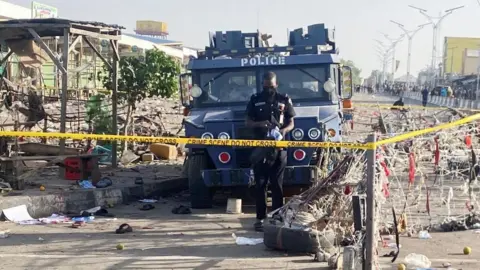
The Nigerian government claims that jihadist groups Boko Haram and Islamic State in West Africa Province (Iswap) are responsible for a significant increase in abductions in north-western and central Nigeria. However, this assertion is met with skepticism from analysts, who insist that the recent kidnappings are primarily perpetrated by local criminal gangs commonly referred to as 'bandits'.
This statement from the government marks the first official attribution of responsibility for the kidnappings, although no supportive evidence has been presented to back these claims.
Kidnapping for ransom has escalated into a substantial business in certain Nigerian regions, with offenders ranging from various criminal networks to jihadist factions and separatists. Although officials routinely assert that they do not pay ransoms, the reality suggests otherwise.
In the last two weeks, three mass abductions have been reported:
- **17 November** - In Maga, Kebbi state, at a Government Girls Comprehensive secondary school, 25 individuals were abducted including one teacher, and all have since been freed.
- **18 November** - In Eruku, Kwara state, 38 individuals were kidnapped from Christ Apostolic Church, and all have been released.
- **21 November** - In Papiri, Niger state, more than 250 children and 12 staff members were reportedly abducted from St Mary's Catholic School, although official numbers remain in dispute.
Despite a nationwide ban on ransom payments, allegations persist that this prohibition has been widely flouted. Presidential spokesman Sunday Dare refrained from commenting on whether any payments were made for the release of recent captives, emphasizing the success of 'kinetic and non-kinetic' processes in securing their freedom.
According to Dare, there is 'abundant data' indicating that jihadist groups are active across the regions affected by kidnappings.
Iswap, a splinter faction of Boko Haram, continues to challenge security forces in Nigeria's northeastern territories, while the group remains largely absent from the northwestern states where most kidnappings occur.
Analysts stress that local criminals, known as bandits, who conduct kidnappings for ransom do not have a centralized structure and primarily operate via motorcycle expeditions across rural areas.
The suggestions that jihadist groups engage in these kidnappings lack consensus, with some experts asserting that the recent high-profile abductions reflect actions of local armed groups rather than established jihadist networks.
Nigeria's security issues have attracted international scrutiny recently, with global leaders expressing concern. However, officials argue that victims of this violence include individuals from all faiths, not solely Christians, as has been portrayed.