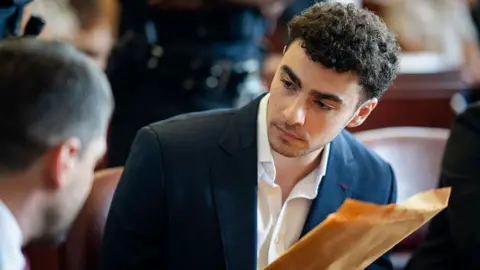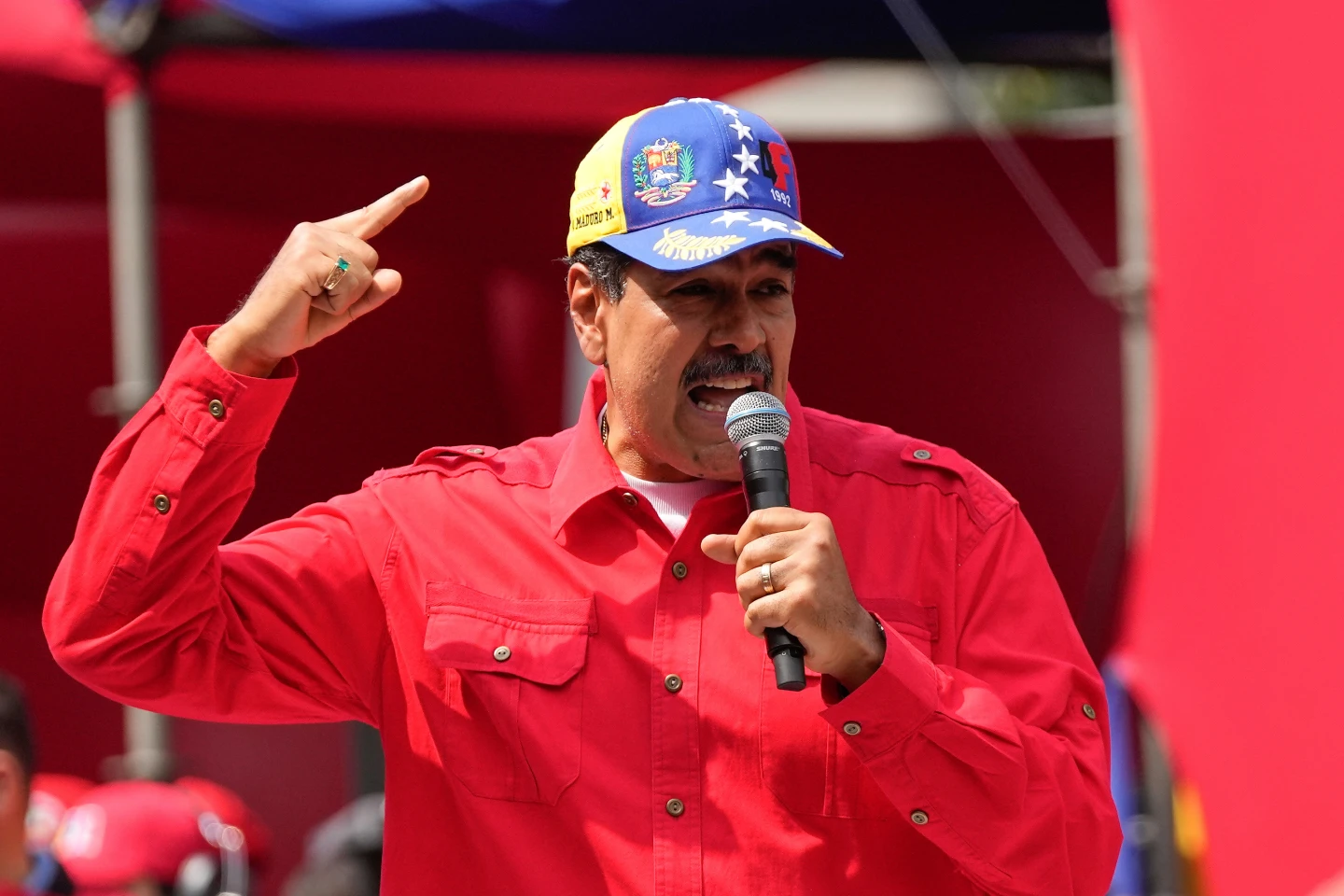
NEW YORK (AP) — Nicolás Maduro, the former president of Venezuela, appeared in a New York courtroom as he seeks to have his drug trafficking indictment dismissed. His legal team argues that U.S. actions obstruct his constitutional rights by blocking access to Venezuelan government funds needed for his legal expenses.
This is the first time Maduro and his wife, Cilia Flores, have been present in court since their arraignment in January, where Maduro declared his innocence, insisting, “I am not guilty. I am a decent man, the constitutional president of my country.” Both remain incarcerated in Brooklyn and have not applied for bail.
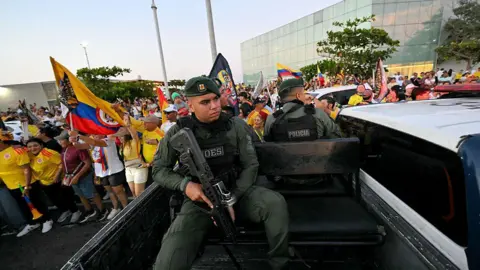
Judge Alvin Hellerstein has yet to establish a trial date, which could be determined at this hearing. Despite their legal troubles, Maduro and Flores retain some support in Venezuela, evident by murals in Caracas advocating for their return. However, Maduro’s influence dwindles under the leadership of Delcy Rodríguez, Venezuela’s acting president, who has instated reforms distancing her administration from Maduro's legacy.
Rodríguez has undertaken significant changes within the Venezuelan government, including restructuring organizations and appointing new ambassadors, while also actively courting international investors in the oil sector at events in the U.S.
The economic sanctions imposed by the U.S. since 2019 complicate Maduro's legal strategy. A statement from his attorney indicated that the U.S. Treasury Department previously permitted Venezuelan funds for legal fees but later rescinded that decision without explanation.
Maduro contends he cannot afford robust legal representation unless he can prove indigence, which complicates his situation further. Prosecutors indicated that Maduro is eligible to use private funds for his defense but not from sanctioned Venezuelan governmental sources.
The charges against Maduro allege deep involvement with drug trafficking organizations, including the facilitation of cocaine shipments to the U.S. and orders for violence against detractors and those who owed drug debts. If convicted, Maduro and Flores could face life imprisonment.
In the backdrop of this legal saga, Venezuelans continue to grapple with a tumultuous economy. Many public sector employees earn approximately $160 per month, struggling against hyperinflation that has risen dramatically in the past few years, indicating that daily life remains challenging regardless of political developments.