In brief
President Trump announced an immediate energy ceasefire between Russia and Ukraine, claiming a mutual agreement. Ukrainian leader Volodymyr Zelensky welcomed the news, while Russian officials, led by spokesman Dmitry Peskov, offered minimal commentary. Pro‑Kremlin media interpreted the move as a one‑sided benefit for Moscow, arguing that it ties Ukraine’s hands. The Kremlin’s real intention appears to be leveraging the ceasefire to press on Ukraine, with Moscow aiming to exploit the situation for wider strategic gains. Analysts warn of possible escalation as Ukrainian drone strikes on Russian oil facilities continue despite the announcement.
Earlier this week President Donald Trump declared that Russia and Ukraine had agreed to an “energy ceasefire” that would immediately stop any strikes on power plants and supply infrastructure. He framed the deal as a “gift” that would protect vital energy links for the United States and its allies.
Ukrainian President Volodymyr Zelensky reacted with a mix of relief and caution, describing the announcement as “new news” at a press briefing. Zelensky’s government said it was ready to sign the ceasefire if Moscow followed through, but it also warned of remained risks due to continuing attacks by Russian drones on Ukrainian facilities.
In Moscow, the reaction was muted. Dmitry Peskov, the Kremlin’s spokesman, said contacts were ongoing and that the Kremlin would speak if and when it had something concrete to confirm. The brevity of the statement only fueled speculation on the Kremlin’s genuine stance.
Pro‑Kremlin outlets seized on the ceasefire to argue that it was effectively a one‑way concession. “Of course we benefit,” the outlet Moskovsky Komsomolets wrote, noting that Ukraine would be prevented from striking Russia’s diesel refineries that have already been damaged multiple times. The article stressed that Moscow would not give up its larger strike campaign, claiming the ceasefire only limited Ukrainian actions.
Analysts point out that Moscow’s real aim may be to use the ceasefire as a bargaining chip for the ongoing fuel deal with the United States. The deal, meant to allow US importers to buy Russian diesel, could shift geopolitical pressure onto Ukraine and U.S. political actors if Ukrainian drone strikes intensify.
While Trump’s announcement created optimism in Western circles, the Kremlin’s silence left the situation ambiguous. Moscow’s official line—expressed again by Peskov—stated that “We don’t want a ceasefire; we want a lasting peace,” hinting at a broader strategy of continued military pressure.
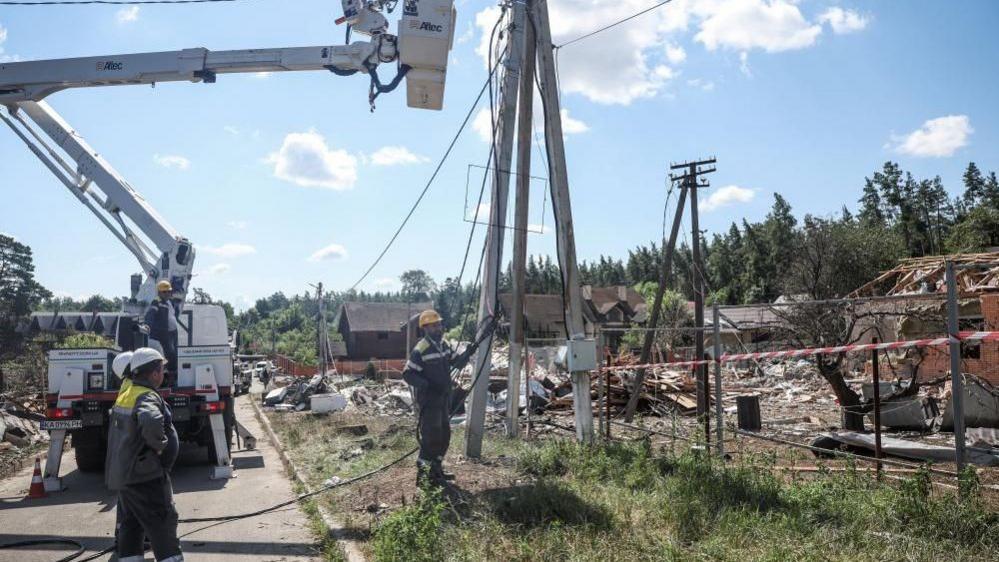
As the conflict continues, the energy ceasefire remains a fragile and contested element. Ukraine’s civil infrastructure will be heavily examined under this new claim, while Russian targets continue to press on both sides of the front. The political fallout will hinge on whether the ceasefire can hold and how the U.S. and their allies respond to Russia’s shifting diplomatic posture.