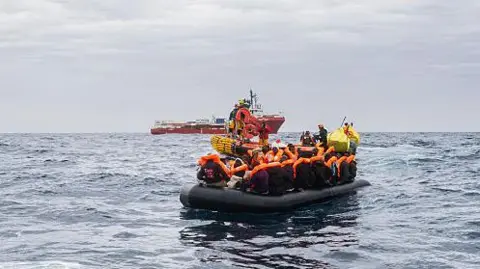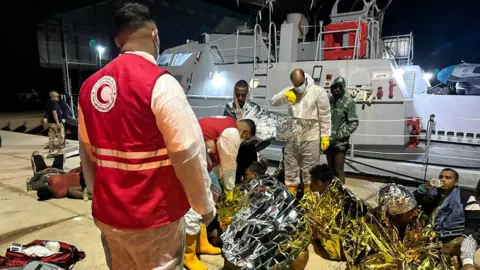
More than three‑hundred young men traveling to the United Kingdom from Iraqi Kurdistan were seized in Libya, where they were held in a guarded compound, tortured and threatened with removal of kidney organs.
All the victims had been organised by smugglers and transported across the Libyan desert to the Mediterranean coast. A militia demanded £3,700 (five thousand dollars) from each family, warning that the reward would be taken ‘with a kidney’ if payment was not made quickly.
Investigations by the BBC revealed that the captives were kept in cramped cells that could hold up to 180 people. Survivors described being in a small space without sunlight for months, with a single toilet shared by everyone and food limited to one slice of bread a day—unless extra money was paid.
One former captive recounted being tortured by having his leg burned, while a 16‑year‑old remembered a cell with no sun for six months and sleeping in a sitting position with everyone else. A photo of a scar on a survivor’s leg matched the incision typical of a kidney operation, although no official confirmation has yet been issued.
Noah Aaron, the smuggler who had organised the journey, is currently serving a ten‑year prison sentence in France for separate money‑laundering and smuggling charges.
Many of the hostages have since been released; some families paid the ransom immediately. However, Kurdish authorities still suspect that others may have paid with their internal organs. A senior official in the Kurdistan Regional Government urges those who survived to warn others against undertaking similar routes to Europe.
These reports come in the wake of a recent BBC investigation that spotlighted another smuggler’s involvement in the same network, illustrating the broader dangers of migration across Libya’s chaotic territory.