
In brief
A 7.7 magnitude earthquake struck central Myanmar, compounding the difficulties from an active civil war and a severe humanitarian crisis. As people in affected areas struggle with limited communication and resources, the military junta's response to the disaster remains uncertain amidst the ongoing conflict.
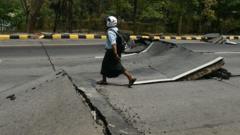
A major earthquake has struck central Myanmar, adding to the already grim situation in a nation grappling with a civil war, widespread food insecurity, and a struggling economy. On Friday, a powerful 7.7 magnitude quake centered around Sagaing, resulting in reports of destruction extending to Mandalay, the country's second-largest city, and Nay Pyi Taw, the capital located over 150 miles (241 km) away. Gathering reliable information from Myanmar proves challenging, as mobile communication networks have failed in the aftermath of the quake, leaving many without electricity or internet access. Journalists from abroad also face significant barriers to entry due to the restrictive environment for press freedom in the country. Myanmar's troubles trace back decades to military rule following its independence from Britain in 1948. A brief restoration of democratic measures occurred in 2011 with free elections, which led to Aung San Suu Kyi's National League for Democracy winning in 2015. However, hopes for a democratic transition were abruptly dashed in 2021 when a coup, led by General Min Aung Hlaing, overthrew and detained Suu Kyi and her administration, alleging electoral fraud. The coup ignited mass protests demanding the return to civilian leadership; however, the military's response included violent crackdowns that have killed hundreds and injured thousands, pushing the protests into armed resistance and ultimately sparking a full-scale civil war. Nearly four years on, combat continues between the military and various resistance factions, with the military no longer in command of significant portions of the nation. According to the UN, over 3.5 million people have been displaced due to ongoing violence, which has left many without access to essential services such as healthcare and food. Food shortages have reached alarming levels, as rapid inflation renders basic necessities unaffordable for millions. Recently, the UN announced impending cuts to aid for over a million individuals in Myanmar due to global funding cuts, further intensifying the crisis following natural disasters, including Typhoon Yagi which caused widespread destruction earlier this year. The earthquake's epicenter near Sagaing, a known rebel zone, introduces further complications, particularly since local unrest had occurred just months prior, leading to heavy military airstrikes. Reports indicate that a hospital in the capital Naypyidaw, which is critical for providing care, has turned into a "mass casualty site," with visuals detailing extensive destruction including collapsed buildings and cracked infrastructure. In response, the military junta has declared a state of emergency across many areas and made a rare appeal for international assistance. However, the direction of their response remains unclear, especially given the ongoing civil conflict led by an increasingly beleaguered general. As Myanmar continues to face hurdles, the impact of natural disasters like this earthquake adds a new layer of urgency to an already devastating humanitarian crisis.

