In brief
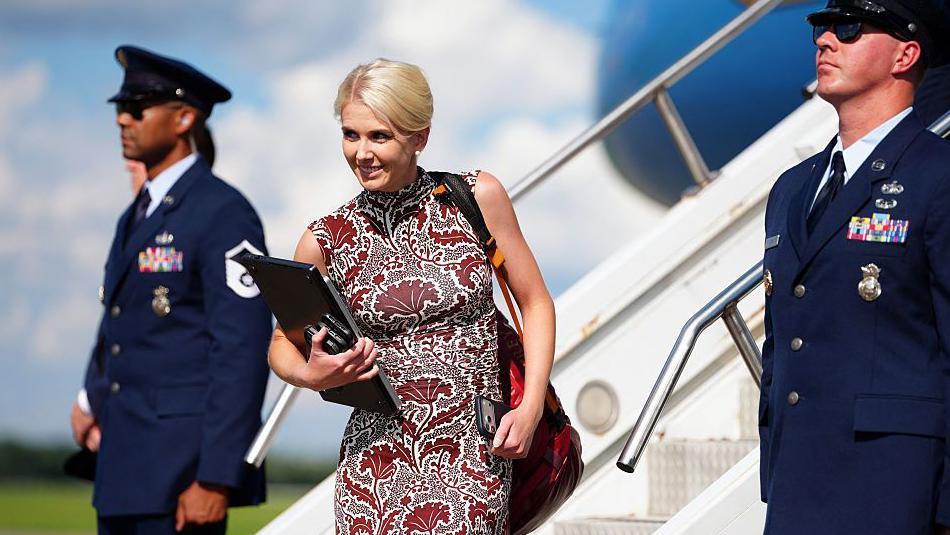
Natalie Harp has become an essential and highly visible presence in President Trump’s inner circle, managing his media output, logistics, and even his personal impressions. Originally a conservative Christian from California who survived bone cancer with the help of Trump’s Right‑to‑Try Act, she is now the White House’s executive assistant and primary gatekeeper. A recent controversy involving Senator Jon Ossoff’s speech has shone international light on her role. Sources attest she is more than a simple aide; she is a “human printer,” a social media scribe and a comfort blanket for the former president. Though rarely mentioned in public speaking, her influence behind the scenes appears far greater than typical white‑house staff roles.
Few people in US President Donald Trump’s orbit have appeared as consistently by his side as Natalie Harp over recent years.
At 35, Harp is a veteran aide entrusted with drafting Trump’s Truth Social posts and handling crucial top‑level tasks in the White House. Recent headlines have spotlighted her after Georgia Senator Jon Ossoff criticized Trump’s flight arrangements, referring to the new Air Force One and admitting Harp was on the pilot’s plane.
Harp’s origins trace back to a peaceful Californian life, where a bone‑cancer struggle led her to celebrate Trump’s signing of the Right‑to‑Try Act as life‑saving. From there she rose via OAN broadcasts into the heart of the 2020 campaign apparatus, becoming a loud‑mouth defender of Trump’s election claims.
Her title—executive assistant—normally denotes a lower tier role, yet real reports suggest she sits as a close companion to the former leader. In practice she manages leadership schedules, prints hard‑copy articles for Trump’s preference, and controls what his feeds see, effectively functioning as his “gatekeeper” and “comfort blanket.”
Sources claim she was present on the secret flight from Turkey after the US received Iran threat warnings, hinting Trump relies on her for emotional support as well as logistical help.
Although the White House calls Harp a valued team member, her influence reaches far beyond a typical executive assistant, underscoring how powerful quietly‑held positions can become in political power structures.