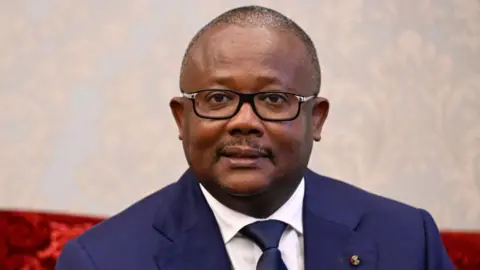
Guinea-Bissau's deposed President Umaro Sissoco Embaló has arrived in neighbouring Senegal following his release by military forces that toppled his government this week, according to Senegal's authorities.
This incident follows negotiations by the regional West African bloc Ecowas to secure his transfer amid rising tensions in Guinea-Bissau.
Senegal's foreign ministry confirmed Embaló's safe arrival on a chartered military flight late Thursday, while the military has already sworn in new transitional leader, General Horta N'Tam, who will rule the coup-prone country for one year.
The coup took place just a day before announcing the provisional results of a presidential and parliamentary election, which the military has suspended. Allegations of a plot supported by a drug baron to destabilise the country were cited as justification for their actions, leading to a closure of borders and a night-time curfew.
Guinea-Bissau, sandwiched between Senegal and Guinea, is recognized as a notorious drug-trafficking hub where the military has wielded significant influence since independence from Portugal in 1974.
Both Embaló and his rival Fernando Dias claimed victory in the recent election, with additional reports of the detention of several key political figures.
In response to the coup, public protests have been banned, and heightened security remains in effect in the capital, Bissau. Despite this, the military has reopened borders and lifted some restrictions after a day of unrest. Meanwhile, the African Union and Ecowas condemned the military's takeover, urging a restoration of constitutional order.
UN Secretary-General Antonio Guterres expressed deep concern about the situation in Guinea-Bissau, calling for an immediate return to constitutional governance.
Historically, Guinea-Bissau has experienced numerous coups and attempted coups over the last fifty years, with the military periodically asserting influence over the political landscape.