In brief
Bangladesh's female athletes are facing unprecedented challenges as Islamist protests have led to the cancellation of several women's football matches, raising concerns over women's rights and safety in public sporting events.
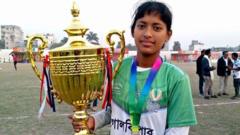
In northern Bangladesh, 17-year-old Asha Roy felt a blend of excitement and anticipation as she prepared to participate in a women's football tournament. However, her enthusiasm rapidly turned to disappointment when the Islami Andolan Bangladesh, a local Islamist group, announced their intention to protest against the match, labeling it "un-Islamic." As tensions escalated shortly before the game, local police intervened, advising the women to return home for their safety."I was frustrated and frightened. We had never faced such a situation before. It was disappointing that we came back without playing," Asha shared her experience with BBC. This incident marks the third cancellation of women's football matches in northern Bangladesh within a mere two weeks, instilling fear among aspiring athletes.The ongoing political transition in the country—a Muslim-majority nation—has raised alarm over the increasing influence of Islamist groups, previously marginalized, now appearing emboldened. The events highlight a disconcerting trend in a country where sports, particularly football, have historically served as vehicles for female empowerment and social mobility.Supporters of women's football are rallying around the cause, taking inspiration from the national women's team, who recently celebrated consecutive victories in the South Asia Football Championships. Asha's teammate, Musammat Tara Moni, is adamant about continuing her pursuit of the sport. "It's my dream to represent our national team. My family supports me, so I am not losing hope," she expressed.However, the threats from Islamist groups are not limited to cancellations. Maulana Ashraf Ali, leader of Islami Andolan Bangladesh in the Rangpur region, articulated their extreme views, asserting that if women play football, they should adhere to strict dress codes and restrict their audience to female spectators only.The widespread backlash against the cancellations, particularly on social media platforms, prompted authorities to investigate the incidents further. Despite efforts to reassure the public, concerns persist regarding the role of the interim government in addressing religious extremism. Critics warn that without robust action, the rising tide of radicalism could lead to increased self-censorship among women in public spaces.The struggle of Bangladesh's women athletes reflects a broader societal challenge as extremist sentiments creep into various facets of daily life. Not merely confined to sports, recent incidents have included protests against literary works and public events featuring prominent female figures, emphasizing the urgent need for a concerted stand against such repression.Activists and scholars alike emphasize the significance of fighting back against these threats, asserting that the spirit of resilience among Bangladeshi women will ultimately prevail. "Everyone will fight efforts to remove women from public spaces," remarked Samina Luthfa, a sociology professor at Dhaka University, emphasizing the deep-rooted cultural opposition to extremism in the country.As tensions mount, authorities, athletes, and advocates continue to navigate the precarious balance between upholding democratic rights and countering the spectre of radicalization that has recently surfaced in Bangladesh's socio-political landscape.